The Best Skincare for Kids: Safe Products and Brands 2026
Skincare for kids is not simply adult skincare in smaller packaging. Children’s skin has distinct biological properties that change how ingredients interact with it, making product selection more consequential at younger ages, not less.
Children’s skin features a thinner stratum corneum, a still-developing acid mantle, and a significantly higher surface-area-to-body-weight ratio. A 2020 review published in Pediatric Dermatology confirmed that these factors cause children to absorb topically applied substances at higher rates than adults. That finding is the biological reason ingredient safety in children’s products demands more scrutiny than standard adult formulations.
This guide covers exactly what children’s skin needs at each developmental stage, which ingredients are genuinely safe, which carry pediatric-specific concerns, how to evaluate brands without relying on marketing language, and how to build routines appropriate for every age from toddler through tween. Every point here is grounded in dermatological research and cosmetic chemistry, not product advertising.
What Is Skincare for Kids: Why Children Need Different Products
Skincare for kids refers to the set of topical products specifically suited to children’s skin biology: products that clean, protect, and support the barrier without disrupting a still-developing system.
This matters because adult skincare is formulated for skin that has a fully mature acid mantle, a thicker and more resistant stratum corneum, and established sebum production. Children’s skin does not share those characteristics. Products developed without accounting for those differences can cause barrier disruption, irritation, or increased systemic absorption of ingredients that pose no concern in adults.
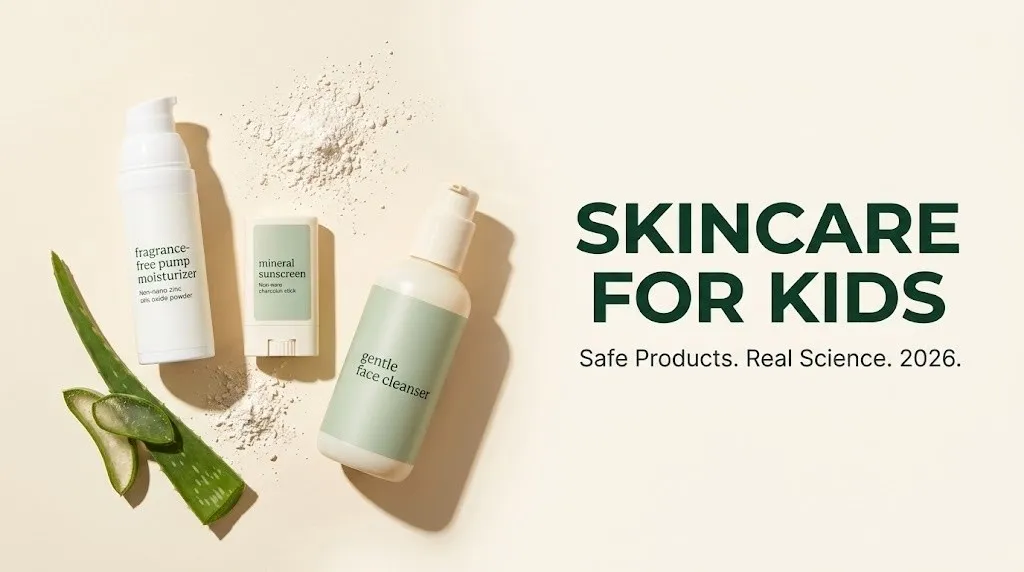
Think of a child’s skin barrier like a newly plastered wall that hasn’t fully cured. It looks intact. It functions. But it’s more porous than a fully set wall, and anything you press against it while it’s still developing leaves a deeper impression.
The American Academy of Dermatology recognizes pediatric skincare as a distinct domain. Its guidance addresses cleanser pH, fragrance exposure in children, sunscreen active ingredient selection by age, and moisturizer formulation for developing skin. That guidance is notably simpler than adult skincare, not more complex.
Key reasons children require different product formulations:
- Thinner skin barrier means ingredients penetrate more quickly and deeply
- An immature acid mantle makes pH-disrupting cleansers more harmful
- Higher surface-area-to-body-weight ratio increases total potential systemic absorption
- A developing immune system may respond more readily to contact allergens like fragrance
- Young children cannot reliably report early signs of product irritation or allergic reaction
- Sebum composition and quantity changes dramatically between infancy and adolescence
How Children’s Skin Differs from Adult Skin
Children’s skin differs from adult skin in four measurable biological ways. Each difference directly affects how topical products should be formulated and applied.
First, the stratum corneum is thinner in infants and young children than in adults. A 2011 study published in the British Journal of Dermatology found that infant stratum corneum thickness is approximately 30% lower than that of adults. Thinner skin offers less natural resistance to the penetration of topically applied compounds.
Second, the acid mantle (the protective, mildly acidic surface film that sits over the skin at approximately pH 4.5 to 5.5 in healthy adult skin) is not fully established at birth. It develops through the first year of life. Products with a pH significantly outside that range disrupt this film before it has stabilized.
Third, percutaneous absorption scales with relative surface area. An infant’s body surface area is proportionally much larger relative to body weight than an adult’s. This means topically applied substances reach systemic circulation at higher effective concentrations in young children than in adults using the same product.
Fourth, filaggrin protein expression determines skin barrier cohesion and moisture retention. Filaggrin density increases with skin maturity. Children with filaggrin mutations (a common genetic variant linked to atopic dermatitis) have a compromised barrier from birth; even children without mutations have lower filaggrin density than healthy adult skin.
| Biological Factor | Infants (0 to 2 years) | Children (3 to 10 years) | Adults |
|---|---|---|---|
| Stratum corneum thickness | Approximately 30% thinner than adult | Thinner than adult average | Full thickness |
| Acid mantle stability | Still developing | Largely established | Fully established |
| Percutaneous absorption rate | Highest of all age groups | Moderately elevated | Baseline reference |
| Sebum production | Very low | Low to moderate | Variable by skin type |
| Filaggrin protein density | Lower | Increasing | Fully expressed |
| Contact allergen response risk | Elevated | Moderately elevated | Baseline |
Children with Fitzpatrick types IV through VI skin have an additional layer of consideration. Darker skin has greater melanin density, which provides some UV protection, but is not a substitute for sunscreen. Post-inflammatory hyperpigmentation (PIH) is also more pronounced in deeper phototypes, making barrier disruption from harsh products a more visible and longer-lasting concern for this group.
When Should Kids Start a Skincare Routine
Children benefit from basic skincare from birth. The appropriate products and number of steps change by age, but the core functions — cleansing, moisturizing, and UV protection — are relevant at every stage.
From birth through approximately 24 months, the American Academy of Dermatology recommends a three-product approach. A fragrance-free, pH-balanced gentle cleanser for bath time. A fragrance-free ceramide or petrolatum-based moisturizer applied within a few minutes of drying. And a mineral sunscreen with zinc oxide when sun exposure cannot be avoided, for infants over 6 months of age. For infants under 6 months, the AAD advises prioritizing sun avoidance and protective clothing before reaching for sunscreen.
Between ages 3 and 9, healthy skin with no diagnosed conditions needs only three things: a gentle cleanser, a fragrance-free moisturizer, and a daily mineral SPF. Multi-step routines in this age range add more potential irritants than they add benefits.
Ages 10 through 14 represent the first genuine inflection point. Hormonal changes stimulate sebaceous gland activity, increasing oil production and introducing the likelihood of congestion and early acne. A modest routine expansion with one targeted product is reasonable at this stage, but only for children who have visible skin changes that warrant it.
Quick Tip:
- Apply moisturizer to a young child within three minutes of bathing — before water fully evaporates from the skin surface — to lock in hydration most effectively
- Patch test any new product on the inner forearm for 48 hours before applying to the face
- Children ages 3 to 9 with no skin conditions need only three products total; anything beyond that is marketing, not medicine
Key Takeaway: The single most evidence-backed habit you can build for a young child’s skin is applying a fragrance-free, ceramide-based moisturizer within three minutes of bathing, every single day, before the skin dries completely.
Safe Skincare Ingredients for Kids: What to Look For
The safest skincare ingredients for children share three properties: they support barrier function without disrupting it, they carry a low allergenic potential, and they have established safety records in pediatric populations specifically, not just in adults.
Ceramides are among the most evidence-supported ingredients for pediatric moisturizers. Human skin naturally contains three primary ceramide types: ceramide NP (INCI: Ceramide NP), ceramide AP (INCI: Ceramide AP), and ceramide EOP (INCI: Ceramide EOP). These act as structural lipids in the skin barrier — the “mortar” between skin cells. A 2017 study published in the Journal of the American Academy of Dermatology found that ceramide-dominant emollients significantly reduced atopic dermatitis severity in pediatric patients compared to standard moisturizers.
Glycerin (INCI: Glycerin) is a humectant that pulls moisture into the stratum corneum from the surrounding environment. It has an extensive pediatric safety record and is well-tolerated across all age groups, including infants. Sodium hyaluronate (INCI: Sodium Hyaluronate) functions similarly, drawing water into the skin’s outer layers.
For very young children and infants with areas of compromised barrier (around the diaper area or dry patches), petrolatum (INCI: Petrolatum) remains one of the most evidence-backed protective occlusives available. It is biologically inert, has no known significant sensitization risk, and forms a protective layer over the skin surface without meaningful penetration.
Colloidal oatmeal (INCI: Avena Sativa Kernel Flour) holds FDA OTC skin protectant status. It contains avenanthramides, which have documented anti-inflammatory activity in human clinical trials. It is appropriate for all ages including infants.
| Ingredient | INCI Name | Function | Age Suitability |
|---|---|---|---|
| Ceramide NP | Ceramide NP | Barrier lipid replenishment | All ages |
| Ceramide AP | Ceramide AP | Barrier lipid replenishment | All ages |
| Ceramide EOP | Ceramide EOP | Barrier lipid replenishment | All ages |
| Glycerin | Glycerin | Humectant | All ages |
| Sodium Hyaluronate | Sodium Hyaluronate | Hydration, water retention | All ages |
| Petrolatum | Petrolatum | Occlusive barrier protection | All ages |
| Avena Sativa Kernel Flour | Avena Sativa Kernel Flour | Skin protectant, anti-inflammatory | All ages |
| Panthenol | Panthenol | Barrier support, soothing | All ages |
| Allantoin | Allantoin | Soothing, barrier support | All ages |
| Zinc Oxide | Zinc Oxide | UV protection, skin protectant | 6 months and older |
Children with Fitzpatrick types I and II skin (very fair, burns easily) may need higher-SPF mineral formulas and more frequent reapplication. Children with sensitive or eczema-prone skin of any phototype benefit most from petrolatum or ceramide-dominant formulas over lighter gel moisturizers.
Kids Skincare Ingredients to Avoid
Several ingredients common in adult skincare carry elevated pediatric concern. The concern is not always a confirmed harm. Sometimes it’s an unresolved safety question. Sometimes it’s a documented allergenic risk. In either case, when a safer alternative exists, the safer alternative is the correct choice for a child’s skin.
Fragrance (INCI: Fragrance or Parfum) is the leading cause of allergic contact dermatitis in children. A 2019 study published in the journal Contact Dermatitis identified fragrance as the most common contact allergen in pediatric patch testing. “Fragrance” and “Parfum” are umbrella terms on an INCI list. Either one can represent dozens of individual chemical compounds. A product labeled “unscented” may still contain fragrance masking agents. Only products explicitly labeled “fragrance-free” and listing neither “Fragrance” nor “Parfum” on their ingredient list are genuinely fragrance-free.
Oxybenzone (INCI: Benzophenone-3), a chemical UV filter in many commercial sunscreens, was flagged in the FDA’s 2019 proposed rule as lacking sufficient safety data to be classified as “generally recognized as safe and effective” for general consumer use. The FDA cited concern about its systemic absorption rate, which is higher in children due to the skin physiology factors covered earlier. This is not a confirmed harm — it is an unresolved safety question. Choosing mineral alternatives avoids it entirely.
Essential oils at significant concentrations are documented pediatric skin sensitizers. Lavender oil (INCI: Lavandula Angustifolia Flower Oil) and tea tree oil (INCI: Melaleuca Alternifolia Leaf Oil) are the most commonly found in children’s products. Neither is appropriate in products for children under age 3, and both should be present at very low concentrations (below 0.5%) in products for older children.
Retinol (INCI: Retinol) and all other retinoids are not appropriate for children’s skincare outside of specific, dermatologist-directed treatment for diagnosed skin conditions.
Ingredients to avoid or evaluate carefully in kids skincare:
- Fragrance / Parfum (any concentration — documented allergen in children)
- Benzophenone-3 / Oxybenzone (FDA unresolved safety status; mineral alternatives are available)
- Lavandula Angustifolia Flower Oil (sensitizing essential oil; not for children under 3)
- Melaleuca Alternifolia Leaf Oil (sensitizing essential oil; not for children under 3)
- Retinol, retinyl palmitate, retinaldehyde, tretinoin (not age-appropriate without medical direction)
- Sodium Lauryl Sulfate as the primary surfactant (documented barrier disruption; especially on young skin)
- Glycolic Acid, Lactic Acid above 5% concentration (not appropriate for young children)
- Propylene Glycol (INCI: Propylene Glycol) at high concentrations in compromised-barrier skin
- Lanolin (INCI: Lanolin) in children with eczema-prone skin (documented sensitization risk in atopic populations)
Key Takeaway: The two ingredients to scan for first on any kids skincare INCI list are “Fragrance” (or “Parfum”) and “Benzophenone-3.” If either is present, find a different product.
Best Skincare Products for Kids: The Essential Categories
The best skincare products for kids perform three functions reliably: cleansing without stripping the skin barrier, moisturizing without introducing contact allergens, and protecting against UV damage with minimal systemic absorption risk.
Every child, regardless of skin type or age, needs exactly three product categories: a gentle cleanser, a fragrance-free moisturizer, and a mineral broad-spectrum sunscreen. That is the complete evidence-supported baseline. Every product beyond those three is either condition-specific or age-specific — not universal.
According to the American Academy of Dermatology, daily moisturizer application is especially important for children with a personal or family history of atopic dermatitis. Consistent use helps maintain barrier integrity and may reduce the frequency and severity of flares.
For the cleanser category, the criteria are clear: sulfate-free (avoiding sodium lauryl sulfate as the primary surfactant), a pH between 4.5 and 6.5, and free of fragrance or parfum. For moisturizers, ceramide-based or petrolatum-dominant formulas are the most clinically supported options for pediatric skin. For sunscreen, mineral formulas using non-nano zinc oxide or titanium dioxide are the preferred choice for daily use on children’s skin.
| Product Category | What to Look For | What to Avoid | Application Frequency |
|---|---|---|---|
| Gentle Cleanser | Sulfate-free, pH 4.5 to 6.5, fragrance-free | Sodium Lauryl Sulfate as first surfactant, Fragrance/Parfum, high pH | Daily |
| Moisturizer | Ceramide NP/AP/EOP, Petrolatum, Glycerin, fragrance-free | Fragrance, essential oils, denatured alcohol | Daily, within 3 minutes of bathing |
| Mineral Sunscreen | Zinc Oxide or Titanium Dioxide, SPF 30+, broad-spectrum | Benzophenone-3, Ethylhexyl Methoxycinnamate, aerosol/spray on young children | Daily; reapply per label |
| Condition Cleanser | 0.5% Salicylic Acid (tweens with congestion only) | Same as above; do not use on children under 10 without congestion | Ages 10 to 14 with visible congestion only |
| Spot Treatment | 2.5% Benzoyl Peroxide (tweens with inflammatory acne only) | Higher concentrations offer no added benefit; lower irritation risk at 2.5% | Active lesions only; not whole-face use |
Children with Fitzpatrick types IV through VI who use a benzoyl peroxide spot treatment should apply a good fragrance-free moisturizer to the surrounding skin. Benzoyl peroxide can cause dryness that triggers post-inflammatory hyperpigmentation in areas adjacent to treated lesions on deeper skin tones.
Kid-Friendly Skincare: What That Label Actually Means
“Kid-friendly skincare” is a marketing descriptor with no regulatory definition. The FDA does not define what a brand can legally call “kid-friendly,” “gentle,” “safe for children,” or “natural” on a cosmetic product label. Any brand can use those terms regardless of what the formula contains.
This matters practically. A parent relying on “kid-friendly” labeling has exactly the same regulatory protection as if they were choosing an adult product based on front-panel marketing copy: none. The claim tells you about brand positioning, not formulation safety.
Three terms that do carry some ingredient-level meaning:
- Fragrance-free: The product contains no added fragrance compounds or fragrance-masking chemicals. This is a meaningful claim. Verify it independently by checking the INCI list for the absence of “Fragrance” or “Parfum.”
- Hypoallergenic: This term has no regulatory definition in the United States. It does not guarantee a lower allergy risk and cannot be used as a safety signal on its own.
- Dermatologist-tested: This means a dermatologist reviewed or assessed the product at some point. It does not mean the product was found safe, recommended, or tested on children specifically.
A genuinely age-appropriate kids product is identified through its INCI ingredient list, not its front-panel claims. The five to seven core safe ingredients in the previous section are your reference point. Confirm the absence of fragrance, high-concentration essential oils, chemical UV filters with outstanding safety questions, and aggressive actives.
One point worth knowing: brightly colored packaging, cartoon characters, and fruit-scented formulas are often signals that a product contains added fragrance compounds or artificial colorants (listed as “CI” numbers on the INCI list). Neither fragrance nor synthetic colorants provides any skincare benefit for children. Both add unnecessary sensitization risk.
Quick Tip:
- The INCI list, not the front panel, is the only reliable source of information about what a product actually contains
- Ignore “natural,” “gentle,” and “clean” as standalone safety signals; verify by ingredient
- A children’s product with a strong fruit scent almost certainly contains added fragrance, regardless of what the front label says
Best Skincare Brands for Kids in 2026
Evaluating the best skincare brands for kids requires looking past pediatric and baby branding and into the actual formulation choices. Several brands have earned consistent credibility in this space based on formula decisions, clinical evidence for their key ingredients, and transparent labeling practices.
The most consistently credible brands for pediatric skincare share these formulation principles: they use ceramides, petrolatum, or colloidal oatmeal as primary moisturizing actives; they formulate without fragrance or parfum; they avoid high-concentration essential oils; and they list all ingredients in standard INCI format without proprietary blend obfuscation.
CeraVe (Baby and healing ointment lines) formulates with ceramide NP, ceramide AP, ceramide EOP, and sodium hyaluronate, all within a patented multi-vesicular emulsion delivery system. Their fragrance-free formulas are among those the American Academy of Dermatology references in its moisturizer guidance for eczema-prone children.
Vanicream products contain no fragrance, dyes, parabens, lanolin, or formaldehyde-releasing preservatives. This makes them a strong option for children with sensitive skin, documented contact allergies, or atopic dermatitis where the allergen list is long and strict.
Aveeno Baby uses colloidal oatmeal (INCI: Avena Sativa Kernel Flour) as its primary active, supported by FDA OTC skin protectant classification and clinical data for atopic dermatitis symptom reduction in pediatric patients.
For sunscreens specifically, brands formulating with non-nano zinc oxide and without chemical UV filters include Badger and Blue Lizard Baby. Both have publicly assessable ingredient lists through the EWG Skin Deep database.
| Brand | Primary Beneficial Ingredients | Fragrance-Free | Pediatric Application |
|---|---|---|---|
| CeraVe Baby | Ceramide NP, Ceramide AP, Ceramide EOP, Sodium Hyaluronate | Yes | Cleanser, moisturizer, ointment |
| Vanicream | Petrolatum, Glycerin | Yes | Sensitive skin, all ages |
| Aveeno Baby | Avena Sativa Kernel Flour | Yes | Moisturizer, wash, bath soak |
| Badger Baby | Zinc Oxide (non-nano) | Yes | Sunscreen primary |
| Blue Lizard Baby | Zinc Oxide (non-nano), Titanium Dioxide | Yes | Sunscreen primary |
| California Baby | Zinc Oxide (non-nano) | Yes | Sunscreen, cleanser |
Note: These brands are listed for ingredient-context reference based on publicly available formulas as of 2026. Always verify the current INCI list at point of purchase. Formulas change.
Key Takeaway: The brand doesn’t protect your child’s skin. The ingredients do. Use brand reputation as a starting filter, then always read the INCI list before purchase.
Kids Skincare Routine by Age Group
The appropriate kids skincare routine changes at each developmental stage. Those changes are driven by real shifts in sebum production, skin barrier maturity, and hormonal activity, not by marketing trends.
A toddler’s routine (ages 1 to 3) should involve no more than two steps at bath time: a gentle, sulfate-free, fragrance-free body wash and a petrolatum or ceramide-based moisturizer applied within three minutes of drying. Sun protection is added on any day with outdoor exposure. Nothing else belongs in this routine.
A school-age child’s routine (ages 4 to 9) mirrors the toddler approach with minor refinement. A gentle, pH-balanced face wash is appropriate if the child is washing their face separately. A fragrance-free moisturizer and daily mineral SPF complete the routine. No serums, no toners, no exfoliants, no active ingredients.
A 2021 study published in Pediatric Dermatology found that early, appropriate intervention for visible skin changes in children ages 10 to 14 reduced both acne severity and associated psychological distress. This supports a modestly expanded routine at the tween stage, but only for children showing visible skin changes.
Morning Routine by Age:
Ages 1 to 3:
- Rinse face with lukewarm water (no cleanser needed every morning unless visibly dirty)
- Apply fragrance-free ceramide or petrolatum moisturizer
- Apply non-nano zinc oxide SPF 30+ if going outdoors (infants over 6 months only)
Ages 4 to 9:
- Wash face gently with a sulfate-free, fragrance-free cleanser
- Apply fragrance-free ceramide moisturizer
- Apply mineral broad-spectrum SPF 30+
Ages 10 to 14 (no active acne):
- Wash face with gentle sulfate-free cleanser
- Apply lightweight, fragrance-free moisturizer
- Apply mineral SPF 30+
Ages 10 to 14 (congestion or early acne present):
- Wash face with 0.5% salicylic acid cleanser (rinse thoroughly; do not leave on)
- Apply fragrance-free, non-comedogenic moisturizer
- Apply mineral SPF 30+
- Apply 2.5% benzoyl peroxide spot treatment to active lesions only (evening step)
Children with atopic dermatitis at any age should apply their prescribed emollient immediately after bath time, using the “soak and seal” method recommended by the National Eczema Association: a 10 to 20 minute lukewarm bath or soak, followed by gentle patting dry (not rubbing), followed immediately by emollient application within three minutes.
Youth Skincare for Tweens Ages 10 to 14
Youth skincare for tweens addresses a real biological transition. At this stage, the hypothalamic-pituitary-gonadal axis activates androgen production. Those androgens directly stimulate sebaceous gland activity, increasing oil output, changing skin texture, and making comedonal acne a common development in this age group.
The appropriate skincare response is targeted, not elaborate. The goal is addressing what’s biologically happening: excess sebum, congested pores, and sometimes early inflammatory acne. This calls for the lowest effective concentration of the most evidence-supported actives available, not a full adult anti-aging or complex serum protocol.
For tweens with visible congestion (blackheads, whiteheads, rough texture) but no inflammatory acne, a salicylic acid (INCI: Salicylic Acid) cleanser at 0.5% is a reasonable addition to the routine. Salicylic acid is a beta-hydroxy acid that enters the pore and dissolves the keratin-lipid plug causing blockage. It is used as a wash-off product; it is applied, lathered, and rinsed. It is not appropriate as a leave-on product for tweens. Children under age 10 should not use it unless directed by a board-certified dermatologist.
For tweens with early inflammatory acne (red papules, pustules), benzoyl peroxide (INCI: Benzoyl Peroxide) at 2.5% is the lowest concentration with strong human clinical evidence for acne reduction. The Journal of the American Academy of Dermatology has consistently identified 2.5% benzoyl peroxide as equally effective to 5% and 10% concentrations for mild to moderate acne, with meaningfully lower irritation risk.
Tweens with deeper Fitzpatrick types IV through VI face an added consideration. Post-inflammatory hyperpigmentation (PIH) following acne lesion resolution is more pronounced in these phototypes. A non-inflammatory approach to acne management — gentle cleansing, targeted spot treatment rather than whole-face application, and consistent SPF use — is especially important for this group.
Tween skincare additions by specific concern:
- Visible congestion only: 0.5% salicylic acid wash-off cleanser; rinse thoroughly
- Mild inflammatory acne: 2.5% benzoyl peroxide spot treatment on active lesions; moisturize surrounding skin
- Dry skin alongside congestion: apply fragrance-free moisturizer before spot treatment, not after
- Moderate to severe acne not improving with OTC options: referral to a board-certified dermatologist for topical adapalene (0.1%) or topical tretinoin is the next appropriate step
Skincare Kits for Tweens: What Should Be Included
Skincare kits for tweens have become a high-volume gift category, but most commercially assembled kits are poorly formulated for the skin they target. Many include toners, essences, eye creams, sheet masks, and serums with no clinical basis for use by a 12-year-old, frequently delivering fragrance, retinol, or high-concentration alpha-hydroxy acids that have no place in a tween’s routine.
A genuinely appropriate skincare kit for tweens contains four items. A gentle, sulfate-free cleanser. A lightweight, fragrance-free moisturizer. A mineral broad-spectrum SPF 30+. And, only if the individual child has a visible skin concern, one targeted product at an age-appropriate concentration.
The Society for Pediatric Dermatology has noted that children as young as 9 are using adult retinol serums and 10%+ AHA exfoliants, often after exposure to beauty content on social media platforms. A 2023 study published in JAMA Dermatology found that this trend was directly linked to social media beauty content viewed by children under 13. These products carry documented risks of barrier disruption, photosensitivity, and in the case of retinoids, potential endocrine system concerns in children who are already in early puberty.
If you’re evaluating any pre-assembled kit, assess each product individually. Ask three questions: Is it fragrance-free? Is every active ingredient at a concentration appropriate for this child’s age? Is there anything in this kit that a board-certified pediatric dermatologist would not recommend?
A properly assembled tween skincare kit:
- Fragrance-free, sulfate-free gentle face cleanser
- Lightweight fragrance-free moisturizer with ceramides or sodium hyaluronate
- Mineral SPF 30+ broad-spectrum (zinc oxide or titanium dioxide, non-nano)
- One optional targeted product: 0.5% salicylic acid cleanser OR 2.5% benzoyl peroxide spot treatment — not both simultaneously
- Nothing else
Key Takeaway: A skincare kit assembled for a tween should have four items maximum. Any kit with more than that is selling a routine the child’s skin does not need.
Girls Skincare: What Is Science and What Is Marketing
Girls skincare as a product category is built primarily on marketing logic rather than dermatological science. The skin biology of a 10-year-old girl and a 10-year-old boy is not meaningfully different in barrier function, ceramide composition, sebum production rate, or ingredient tolerance. Products marketed “for girls” are differentiated most often by scent, color, and packaging, not by any medically meaningful formulation distinction.
The gender-based differences in adolescent skin that do exist emerge only from approximately age 12 onward, when androgen-driven differences in sebum production become apparent between biological males and females. Even then, the dermatological recommendations are identical: gentle cleanser, fragrance-free moisturizer, SPF, and one targeted active if acne develops. The American Academy of Dermatology does not differentiate “girls skincare” from “boys skincare” in its pediatric guidance. The formulation principles apply identically across sexes.
The practical concern is this: products marketed specifically to girls in the tween range (ages 8 to 14) frequently contain fragrance, artificial colorants, and high-sensory elements (fruity scents, glitter, shimmer) that add allergen and sensitizer exposure with no skincare benefit. The motivation for those additions is consumer appeal, not skin health.
Parents and caregivers of girls should approach products marketed through social media influencers to this demographic with particular scrutiny. The 2023 JAMA Dermatology study mentioned earlier found children as young as 9 purchasing adult retinol serums and AHA exfoliants after exposure to skincare content on social platforms. None of those products are appropriate for that age group.
| Marketing Claim | What It Actually Signals | What to Do |
|---|---|---|
| “For girls” | Scented, often colored; no formula difference | Evaluate the INCI list independently |
| “Natural” | No regulatory definition | Verify safety of each ingredient individually |
| “Gentle” | No regulated standard | Look for fragrance-free and sulfate-free on the INCI list |
| “Dermatologist-tested” | A dermatologist assessed it; not a safety certification | Look for AAD-aligned formulation criteria |
| “Clean beauty” | No legal definition | Check for fragrance-free and evidence-supported actives |
| “Influencer-approved” | Marketing relationship, not dermatological endorsement | Disregard entirely for pediatric skincare decisions |
Kids Skincare for Sensitive Skin and Atopic Dermatitis
Children with sensitive skin or atopic dermatitis (eczema) need a more deliberate product approach because their skin barrier is structurally compromised. Atopic dermatitis involves a dysfunction in filaggrin production that impairs barrier cohesion, allowing water to escape as transepidermal water loss (TEWL) and irritants to enter through the disrupted surface.
The National Eczema Association recommends a moisturizer-forward routine for children with atopic dermatitis: apply a ceramide-rich or petrolatum-based emollient at least twice daily, and always within three minutes of bathing (the “soak and seal” method). This protocol has strong clinical evidence from multiple randomized controlled trials showing reduced flare frequency and improved barrier function over time.
Ingredient selection is especially strict for children with atopic dermatitis. Even commonly well-tolerated ingredients can trigger flares in sensitized individuals. Fragrance is the first to eliminate, without exception. Beyond that, watch for propylene glycol (INCI: Propylene Glycol), which is a potential contact sensitizer in compromised barriers, and lanolin (INCI: Lanolin), which carries documented sensitization risk specifically in eczema-prone skin.
A 2019 study in the Journal of the American Academy of Dermatology found that daily moisturizer application in infants with a family history of atopic dermatitis delayed the onset of eczema symptoms compared to a control group with no moisturizer intervention. This is among the strongest published evidence for proactive skincare in high-risk children.
Children with Fitzpatrick types IV through VI and atopic dermatitis face an additional concern. Post-inflammatory hyperpigmentation following eczema lesion resolution can be long-lasting and psychologically distressing. Consistent emollient use that reduces inflammation directly reduces PIH risk in this group.
When to consult a board-certified pediatric dermatologist for atopic dermatitis:
- Skin is not adequately controlled with daily moisturizers after four to six weeks of consistent use
- The child is losing sleep due to itching
- Skin appears infected (warm, weeping, crusted lesions with surrounding redness)
- OTC hydrocortisone 1% has been used more than seven consecutive days without improvement
- The child has widespread involvement affecting more than 10% of body surface area
At that appointment, ask specifically about topical calcineurin inhibitors (tacrolimus, pimecrolimus) or newer prescription options for children who have not responded to standard emollient therapy.
Key Takeaway: For any child with atopic dermatitis, the single highest-evidence intervention is applying a petrolatum or ceramide-dominant emollient within three minutes of bathing, at minimum twice daily, with absolute exclusion of any product containing fragrance or parfum.
Kids Sunscreen: The One Product No Child Should Skip
Kids sunscreen is the most evidence-supported skincare intervention for children at every age. UV exposure in childhood is the primary modifiable risk factor for skin cancer development in adulthood. The American Academy of Dermatology reports that one blistering sunburn during childhood more than doubles a person’s lifetime risk of melanoma.
Mineral sunscreens using zinc oxide (INCI: Zinc Oxide) and titanium dioxide (INCI: Titanium Dioxide) are the preferred options for children. They work at the skin surface by reflecting and scattering UV radiation. They do not require skin absorption to function. A 2012 study published in the British Journal of Dermatology confirmed that non-nano zinc oxide particles do not penetrate intact skin, eliminating systemic absorption concern.
Chemical UV filters should be avoided in children where a mineral alternative is available. The FDA’s 2019 proposed rule determined that oxybenzone (INCI: Benzophenone-3), octinoxate (INCI: Ethylhexyl Methoxycinnamate), and several other chemical filters lacked sufficient safety data to be classified as “generally recognized as safe and effective.” The FDA’s primary concern was systemic absorption. This is not a confirmed harm. It is an open safety question, and when a proven-safe alternative exists, using it is the reasonable choice for children.
For children under 6 months, the AAD recommends avoiding sunscreen entirely where possible. The preferred approach is shade, UV-protective clothing, and hats. Sunscreen is reserved for brief unavoidable exposure on very young infants.
Sunscreen application for children over 6 months:
- Choose a broad-spectrum mineral formula with SPF 30 or higher using zinc oxide as the primary or sole active UV filter
- Select lotion or stick format; avoid spray formulas on children due to inhalation risk during application
- Apply 15 to 30 minutes before outdoor exposure begins
- Use approximately one ounce (roughly the volume of a shot glass) for full-body coverage on an average-sized child
- Apply to all sun-exposed areas including ears, back of the neck, backs of hands, and tops of feet
- Reapply every two hours of outdoor time and immediately after swimming or towel-drying
- For children with Fitzpatrick types I and II: consider SPF 50+ and prioritize physical shade additionally
| Sunscreen Type | Active Filter | Penetrates Skin | FDA Safety Status | Recommended for Children |
|---|---|---|---|---|
| Mineral (zinc oxide) | Zinc Oxide | No (non-nano, intact skin) | GRASE confirmed | Yes, preferred option |
| Mineral (titanium dioxide) | Titanium Dioxide | No (non-nano, intact skin) | GRASE confirmed | Yes, preferred option |
| Chemical (oxybenzone) | Benzophenone-3 | Yes, detected systemically | Insufficient safety data | Avoid where mineral is available |
| Chemical (octinoxate) | Ethylhexyl Methoxycinnamate | Yes, detected systemically | Insufficient safety data | Avoid where mineral is available |
| Chemical (avobenzone) | Butyl Methoxydibenzoylmethane | Yes, detected systemically | Insufficient safety data | Avoid where mineral is available |
How to Read a Kids Skincare Label
Reading a kids skincare label accurately requires understanding two distinct sections: the “Drug Facts” panel (required only for FDA-regulated OTC drug products like sunscreen and acne treatments), and the standard cosmetic ingredient list formatted in INCI order from highest to lowest concentration.
The INCI list is organized by descending concentration. The first five ingredients make up the majority of the formula by weight. If a supposedly beneficial ingredient (ceramides, colloidal oatmeal) appears at the bottom of a long list, it is present at a concentration likely too low to affect the skin in a measurable way.
According to the FDA, cosmetic manufacturers are not required to obtain FDA approval before bringing a product to market. This regulatory reality makes ingredient list literacy the primary tool a parent has for independent safety evaluation. No labeling claim on the front of a package compensates for what the INCI list reveals.
How to evaluate a kids skincare label in five steps:
- Find the INCI ingredient list. Check the first five ingredients. Confirm that at least one is a barrier-supporting ingredient: ceramide NP, petrolatum, glycerin, sodium hyaluronate, or Avena Sativa Kernel Flour.
- Scan the entire INCI list for “Fragrance” or “Parfum.” These are single umbrella terms covering potentially dozens of individual compounds. Either one found anywhere on the list means the product is not fragrance-free.
- Check for active ingredients listed under “Drug Facts” if present. Confirm the concentration listed matches age-appropriate ranges (0.5% salicylic acid for tweens; 2% to 25% zinc oxide for sunscreen).
- Look for preservatives. Phenoxyethanol (INCI: Phenoxyethanol) is generally accepted at concentrations below 1% per European Commission Cosmetics Regulation EC 1223/2009. Formaldehyde-releasing preservatives (DMDM Hydantoin, Quaternium-15) are worth avoiding in products for young children.
- Confirm no added colorants. Artificial dyes appear as “CI” numbers (e.g., CI 42090) on INCI lists. They add no skincare benefit and introduce unnecessary sensitization variables.
Quick Tip:
- A long INCI list is not a warning sign on its own. What matters is whether the first five ingredients are barrier-supporting and whether fragrance is absent.
- Compare the first ingredient across two competing products. The first ingredient is typically water or a solvent. The second or third ingredient is where the formula’s core function lives.
- If “Fragrance” or “Parfum” appears anywhere on the list — even near the bottom — the product is not fragrance-free.
Good Skincare Products for Kids: The Simplest Effective Routine
Good skincare products for kids are not the most elaborate ones. They are the ones that consistently perform the three functions children’s skin requires: gentle cleansing, barrier-reinforcing hydration, and daily UV protection — with the fewest unnecessary ingredients possible.
The simplest effective routine for a child with no skin conditions is five steps across the full day. Morning: gentle sulfate-free cleanser, fragrance-free ceramide moisturizer, mineral SPF 30+. Evening: gentle cleanser, fragrance-free moisturizer. That is the evidence-supported baseline for every age from 3 to 14.
Resist adding products because of marketing trends, viral social media routines, or influencer endorsements. Children’s skin does not benefit from toners, facial mists, vitamin C serums, niacinamide serums, exfoliating masks, sheet masks, or jade rollers. The dermatological principle of minimum effective intervention applies with particular force in pediatric skincare, where every unnecessary ingredient is a potential exposure without benefit.
The American Academy of Dermatology has consistently stated that the foundation of pediatric skincare is gentleness and consistency. No individual ingredient outperforms daily moisturizer applied consistently at the right time, on the right skin, in the right amount.
| Routine Step | Product Type | Primary Ingredients to Look For | Ingredients to Avoid |
|---|---|---|---|
| Morning cleanse | Sulfate-free, pH-balanced face wash | Cocamidopropyl Betaine or Sodium Cocoyl Isethionate as surfactants | Sodium Lauryl Sulfate, Fragrance |
| Morning moisturize | Ceramide or petrolatum-based cream | Ceramide NP, Petrolatum, Glycerin | Fragrance, Denatured Alcohol, Essential Oils |
| Morning SPF | Mineral broad-spectrum SPF 30+ | Zinc Oxide (non-nano), Titanium Dioxide | Benzophenone-3, spray format |
| Evening cleanse | Same as morning | Same as morning | Same as morning |
| Evening moisturize | Same or slightly richer texture than morning | Same as morning | Same as morning |
| Optional AM/PM (ages 10+, congestion present) | 0.5% Salicylic Acid wash-off cleanser | Salicylic Acid 0.5% | Leave-on format, higher concentrations |
The most important skincare habit you can establish for any child is consistent daily SPF before outdoor exposure. No serum, no toner, no active ingredient available over the counter does more for long-term skin health than sun protection started before the skin accumulates UV damage. UV exposure in childhood is the variable most clearly linked to adult skin cancer risk. That one habit, done daily, earns back every dollar spent and more.
Frequently Asked Questions About Skincare for Kids
What skincare products are safe for kids?
The safest skincare products for kids are fragrance-free, sulfate-free gentle cleansers, ceramide-based or petrolatum-based moisturizers, and broad-spectrum mineral sunscreens with zinc oxide or titanium dioxide as the active UV filters.
Products should be free of added fragrance (listed as “Fragrance” or “Parfum” on the INCI list), essential oils at significant concentrations, and chemical UV filters with unresolved pediatric safety data such as oxybenzone (INCI: Benzophenone-3).
The American Academy of Dermatology recommends this three-product foundation as the evidence-supported baseline for all children with healthy skin, from infancy through adolescence.
At what age should kids start using skincare?
Children benefit from basic skincare from birth, beginning with a fragrance-free, sulfate-free gentle cleanser and a ceramide or petrolatum-based moisturizer applied after bathing.
Mineral sunscreen with zinc oxide is appropriate for infants over 6 months; for infants under 6 months, the American Academy of Dermatology recommends prioritizing sun avoidance and protective clothing wherever feasible over sunscreen application.
A more expanded routine with targeted actives such as low-concentration salicylic acid is appropriate only from around ages 10 to 12, when hormonal changes begin producing visible skin changes that warrant them.
What ingredients should I avoid in kids skincare products?
The primary ingredients to avoid in kids skincare are fragrance (INCI: Fragrance or Parfum), oxybenzone (INCI: Benzophenone-3) in sunscreens, high-concentration essential oils such as Lavandula Angustifolia Flower Oil and Melaleuca Alternifolia Leaf Oil, retinoids including retinol, and sodium lauryl sulfate as a primary cleanser surfactant.
These ingredients carry elevated concern for pediatric populations due to their allergenic potential, outstanding systemic absorption safety questions, or age-inappropriateness for developing skin.
For children under age 3, the standard is strictest: every product in the routine should be fragrance-free, essential oil-free, and built around barrier-supporting ingredients only.
Is it okay for kids to use adult skincare products?
Most adult skincare products are not appropriate for children because they contain active ingredients, retinoids, high-concentration AHAs, and chemical UV filters formulated for the physiology of adult skin.
Children’s skin is thinner, more permeable, and has a higher surface-area-to-body-weight ratio — all of which increase the rate and extent of ingredient absorption compared to adult skin.
Before any adult-formulated active ingredient is introduced to a child’s routine, a board-certified dermatologist should confirm it is appropriate for the child’s specific age, skin condition, and exposure pattern.
What is the best moisturizer for kids?
The best moisturizer for kids is a fragrance-free formula built around ceramide NP, ceramide AP, ceramide EOP, petrolatum, or colloidal oatmeal (Avena Sativa Kernel Flour), applied within three minutes of bathing.
A 2017 study published in the Journal of the American Academy of Dermatology found that ceramide-dominant emollients significantly reduced atopic dermatitis severity in pediatric patients compared to standard moisturizer formulas.
For children with no diagnosed skin conditions, any fragrance-free moisturizer listing ceramides or petrolatum as primary ingredients is appropriate for daily use.
Do kids need a different sunscreen than adults?
Children need mineral sunscreens with zinc oxide or titanium dioxide rather than chemical UV filters, because mineral actives reflect UV radiation at the skin surface and do not require systemic absorption to function.
The FDA’s 2019 proposed rule required additional safety data on chemical UV filters including oxybenzone before they can be confirmed as generally safe for widespread use, with specific concern related to systemic absorption — a concern that applies more acutely to children given their higher percutaneous absorption rate.
Children under 6 months should avoid sunscreen where possible per American Academy of Dermatology guidance, focusing instead on protective clothing, hats, and shade during peak UV hours.
Children’s skin is among the most resilient systems in the human body when it’s given what it actually needs: simple, consistent, evidence-supported care and protection from unnecessary chemical exposure. The three-product routine described throughout this guide is not a limitation. It is the result of applying real dermatological science to an age group that has been significantly oversold on complexity.
Buy fragrance-free. Choose non-nano mineral SPF. Read the INCI list before you read the front panel. If a product marketed to children leads with scent, colorants, or trend ingredients, that’s your signal to put it back on the shelf.
Start simple. Your child’s skin already knows what it’s doing. Your job is not to override that with unnecessary chemistry.