Gum Disease Self-Care Guide: What Actually Works in 2026
Gum disease self-care can fully reverse early-stage gingivitis with consistent daily habits. At the more advanced stage of periodontitis, the right home practices slow further damage and protect the bone and tissue that remain.
The scale of this condition is not small. According to the Centers for Disease Control and Prevention, 47.2% of American adults aged 30 and older have some form of periodontal disease. The American Academy of Periodontology links untreated gum disease to increased cardiovascular disease risk and impaired blood sugar control in people with diabetes.
This guide covers specific self-care practices backed by clinical evidence, practices that only seem helpful but lack solid data, and the clear line between what home care can manage and what requires a trained periodontist. Modified guidance for pregnancy, diabetes, and smoking is included throughout.
What Is Gum Disease Self-Care?
Gum disease self-care refers to the daily habits that control oral bacteria, reduce gingival inflammation, and protect the structures that hold teeth in place.
It includes brushing, interdental cleaning, antimicrobial rinsing, and dietary choices that directly affect the oral environment. Self-care is not a replacement for professional periodontal treatment. It is the foundational layer that either prevents disease progression or helps maintain gains made after professional intervention.
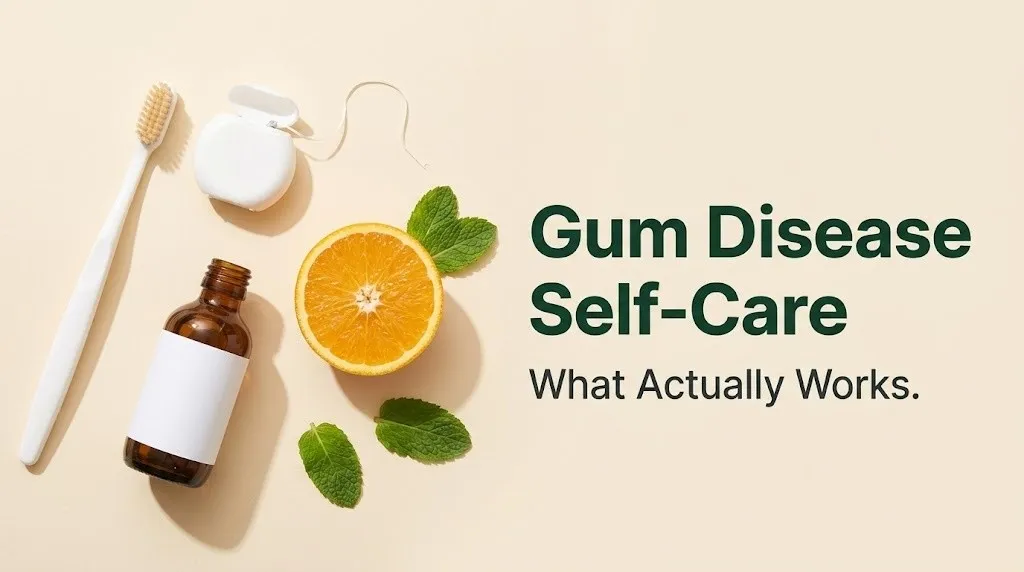
The American Academy of Periodontology identifies two main disease stages relevant to self-care decisions. Gingivitis is inflammation of the gingival tissue caused by plaque accumulation at the gum line. It is fully reversible with consistent self-care. Periodontitis involves destruction of the periodontal ligament and alveolar bone. At this stage, self-care supports treatment outcomes but cannot restore lost tissue.
Think of it like a garden left without weeding. A week of neglect lets weeds spread through the surface. A month of neglect, and the roots go deep enough that pulling them by hand is no longer an option.
Self-care practices with evidence support include:
- Twice-daily brushing with fluoride toothpaste using correct technique
- Once-daily interdental cleaning using floss, interdental brushes, or a water flosser
- Antimicrobial rinsing appropriate to the specific disease stage
- Dietary choices that reduce sugar and support gingival tissue integrity
- Smoking cessation, which has the strongest single behavioral impact on periodontal outcomes
What Is Gum Disease and Why Self-Care Matters
Gum disease is a bacterial infection of the gingival tissue and supporting structures beneath it, driven by microbial biofilm (dental plaque) accumulating at and below the gum line.
The bacteria most consistently linked to advanced periodontal disease are called the red complex. These three pathogens are Porphyromonas gingivalis, Tannerella forsythia, and Treponema denticola. They are anaerobic organisms that thrive in the oxygen-poor environment of the subgingival pocket.
These bacteria produce enzymes and toxins that break down collagen in the periodontal ligament. They also trigger a persistent immune response that simultaneously attacks the bacteria and destroys the surrounding bone. Left unaddressed, this cycle deepens the periodontal pocket and causes more structural damage with each inflammatory episode.
Self-care matters because disrupting the biofilm every 24 hours prevents the bacterial community from maturing into its most destructive form. According to the National Institute of Dental and Craniofacial Research, daily plaque removal is the primary evidence-based method for preventing gingivitis from progressing to periodontitis.
The consequences of unmanaged gum disease extend beyond the mouth. A 2012 systematic review published in the Journal of Periodontology found associations between periodontal disease severity and elevated markers of systemic inflammation, including C-reactive protein. This connects periodontal bacteria to broader immune responses throughout the body.
| Gum Disease Stage | Primary Cause | Self-Care Impact | Professional Treatment Needed |
|---|---|---|---|
| Healthy gums | No significant biofilm | Preventive maintenance | No (routine monitoring only) |
| Gingivitis | Supragingival biofilm | Fully reverses condition | Optional at this stage |
| Early periodontitis | Sub- and supragingival biofilm | Slows further progression | Yes |
| Moderate to severe periodontitis | Deep subgingival biofilm and calculus | Maintains professional treatment gains | Always required |
Gingivitis vs. Periodontitis: Why the Distinction Matters for Self-Care
Gingivitis and periodontitis respond differently to self-care. Treating them as the same condition is one of the most common and consequential home management errors.
Gingivitis presents with red, swollen, and bleeding gums. The infection stays within the gingival tissue. No bone loss has occurred. This stage responds directly and fully to meticulous daily plaque removal.
Periodontitis is categorically different. The 2017 Classification of Periodontal and Peri-Implant Diseases, developed jointly by the American Academy of Periodontology and the European Federation of Periodontology, defines periodontitis by clinical attachment loss and radiographic bone destruction. Self-care cannot undo that bone loss. It can halt further destruction when combined with professional scaling and root planing.
| Feature | Gingivitis | Periodontitis |
|---|---|---|
| Bone loss present | No | Yes |
| Reversible with self-care alone | Yes | No |
| Typical resolution time with consistent self-care | 2 to 4 weeks | Ongoing maintenance |
| Professional treatment required | Optional if very early | Always required |
| Bleeding on probing | Common | Present but may reduce with hygiene |
| Probing depth at affected sites | 1 to 3 mm (normal range) | 4 mm or greater |
People with long-term diabetes, a history of heavy smoking, or immune suppression can develop periodontitis even with adequate self-care. These individuals should see a board-certified periodontist for baseline clinical and radiographic assessment rather than relying on self-care alone to determine their disease status.
Key Takeaway: Gingivitis reverses fully with 2 to 4 weeks of consistent daily self-care; periodontitis requires professional scaling and root planing first, with daily home care maintaining those results long-term.
Brushing Technique for Gum Disease
The modified Bass technique is the brushing method most consistently recommended for people managing gum disease.
To perform it, hold the brush at a 45-degree angle to the gum line. Use short, vibrating strokes with gentle pressure to disrupt biofilm at the gingival margin. Cover each section of the mouth for 10 to 15 strokes before moving to the next area.
An oscillating-rotating electric toothbrush offers measurable additional benefit. A 2014 Cochrane systematic review found that oscillating-rotating electric toothbrushes reduced gingivitis by 17% more than manual toothbrushes at 3 months. This finding is consistent across multiple included studies in that review.
Toothpaste selection matters beyond brand preference. The American Dental Association endorses fluoride toothpaste at 1,000 to 1,500 ppm sodium fluoride for adults. Stannous fluoride (SnF2) formulations may provide additional antiplaque activity beyond the antimicrobial contribution of sodium fluoride alone. Triclosan was once added to many antiplaque toothpastes but has been removed from most formulations over safety concerns in broader consumer products.
To perform the modified Bass technique correctly:
- Position the brush at a 45-degree angle to the gum line.
- Apply light pressure; never scrub against gum tissue.
- Use short back-and-forth vibrating strokes, 10 to 15 per section.
- Move systematically: outer surfaces, then inner surfaces, then chewing surfaces.
- Brush for a minimum of two full minutes, twice daily.
- Rinse the brush thoroughly after use and store it upright to air-dry.
Aggressive brushing causes gingival recession, particularly in people with anatomically thin gingival tissue. This susceptibility is not limited to any specific population, but individuals with naturally thin tissue biotype across all Fitzpatrick phototypes should have a periodontist assess their gingival biotype and advise on appropriate pressure.
Flossing with Gum Disease
String floss and interdental brushes are both evidence-supported tools for removing plaque from spaces a toothbrush cannot access.
A 2019 Cochrane review of interdental cleaning found that adding floss or interdental brushes to toothbrushing reduced gingivitis and plaque scores beyond brushing alone. The certainty of evidence was rated low to moderate due to study design limitations, but clinical consensus strongly and consistently supports daily interdental cleaning as a non-negotiable part of gum disease management.
Interdental brushes may outperform string floss for people with wider interdental spaces. This is common after gingival recession or following professional periodontal treatment. These brushes come in numbered sizes. Choose a size that fits snugly into the space without forcing through it.
Water flossers are a useful adjunct, not a replacement for string floss or interdental brushes. A 2020 study in the Journal of Clinical Dentistry found that a water flosser reduced whole-mouth bleeding by 55% and gingivitis scores by 45% compared to string floss over a 4-week clinical trial period. For people with limited manual dexterity, implants, fixed bridges, or orthodontic appliances, a water flosser is often the most practical daily option.
Key facts about interdental cleaning with gum disease:
- Once-daily cleaning is the minimum; evening is the more important session
- Bleeding during flossing is common in gingivitis and typically resolves within 1 to 2 weeks of consistent technique
- Stopping flossing because it bleeds leaves biofilm in place and worsens the underlying inflammation
- String floss works best in tight contact points with no recession
- Interdental brushes work best after recession creates wider spaces between teeth
- People on anticoagulant medications should discuss interdental technique with their dentist, as a soft interdental brush may reduce bleeding risk compared to string floss
Antibacterial Mouthwash for Gum Disease
Chlorhexidine gluconate at 0.12% concentration is the most clinically validated antimicrobial rinse for short-term gum disease management.
Multiple meta-analyses published in the Journal of Clinical Periodontology consistently identify chlorhexidine as the gold standard adjunctive antimicrobial for gingivitis control. It disrupts bacterial cell membranes and binds to oral mucosal surfaces, releasing gradually and providing antimicrobial activity for up to 12 hours. This property is called substantivity.
Chlorhexidine carries real limitations for daily use. Brown tooth staining, altered taste perception, and occasional mucosal irritation occur with prolonged use. The American Academy of Periodontology and the American Dental Association recommend short-term use of 2 to 4 weeks, typically following professional cleaning, rather than as a permanent part of the daily routine.
Essential oil mouthwashes are the most evidence-supported long-term alternative. A 6-month clinical trial published in the Journal of the American Dental Association found that mouthwashes containing thymol, eucalyptol, menthol, and methyl salicylate reduced plaque and gingivitis scores compared to a control rinse over the full study period.
| Rinse Type | Active Compound | Recommended Duration | Evidence Level |
|---|---|---|---|
| Chlorhexidine 0.12% | Chlorhexidine gluconate | 2 to 4 weeks (short-term) | Strong RCT and meta-analysis support |
| Essential oil mouthwash | Thymol, eucalyptol, menthol | Long-term maintenance | Moderate clinical trial evidence |
| Cetylpyridinium chloride | CPC at 0.05% to 0.1% | Daily maintenance | Moderate evidence |
| Saltwater rinse | Sodium chloride (isotonic) | Daily supportive use | Limited formal trial data |
| Oil pulling | Sesame or coconut oil | Not recommended as primary | Preliminary evidence only |
Alcohol-containing mouthwashes can irritate already inflamed gingival tissue. People with dry mouth, those taking medications that cause xerostomia, and those in recovery from alcohol use disorder should choose alcohol-free formulations across all rinse categories.
Key Takeaway: Chlorhexidine gluconate at 0.12% is the strongest short-term antimicrobial rinse for gum disease, but staining limits it to 2 to 4 week courses; essential oil mouthwashes containing thymol, eucalyptol, menthol, and methyl salicylate are the best-supported choice for long-term daily maintenance.
Saltwater Rinse for Gum Disease
A saltwater rinse is a low-cost supportive measure that reduces oral bacteria and eases gingival inflammation through an osmotic effect on inflamed tissue.
When plain sodium chloride dissolves in warm water at approximately 0.9% concentration, the resulting isotonic saline draws fluid from swollen gingival tissue temporarily. It also creates a briefly unfavorable environment for some oral pathogens. The effect is real, but it is short-lived and surface-level.
A 2016 study published in Oral Health and Preventive Dentistry found that saline rinses produced short-term reductions in gingival bleeding and soft tissue inflammation in post-extraction and minor oral surgery cases. This supports a role as a soothing, supportive rinse after procedural care or during acute flare-ups.
Saltwater rinsing does not remove plaque and does not disrupt mature subgingival biofilm. Think of it like rinsing a minor cut with saline before covering it. The saline cleans the surface and reduces bacterial load briefly; it does not repair the tissue or prevent reinfection on its own.
To prepare and use a saltwater rinse correctly:
- Dissolve one teaspoon of plain non-iodized salt in 8 ounces of warm (not hot) water.
- Stir until fully dissolved before using.
- Swish gently for 30 seconds and spit; do not swallow.
- Use after brushing and flossing, not as a replacement for either.
- Limit to once or twice daily to avoid irritating inflamed tissue further.
People managing hypertension on a sodium-restricted diet should ask their primary care physician whether daily saline rinsing is appropriate within their overall sodium intake context before making it a daily habit.
Oil Pulling for Gum Disease: What the Evidence Actually Shows
Oil pulling involves swishing oil in the mouth for 10 to 20 minutes as a traditional Ayurvedic self-care practice. The available clinical evidence does not support it as a primary or standalone treatment for gum disease.
A 2014 randomized controlled trial published in the Journal of Clinical and Diagnostic Research compared sesame oil pulling to chlorhexidine 0.12% rinse. Both showed reductions in plaque and bacterial counts over 2 weeks. However, the study used a small sample, ran for only 2 weeks, and was not blinded. These design limitations substantially reduce how far the findings can be generalized.
Preliminary research on coconut oil pulling suggests modest antibacterial effects against Streptococcus mutans in in vitro (laboratory cell) settings. Human clinical trials with adequate sample sizes and durations are not yet available to establish coconut oil pulling as a clinical standard. The American Academy of Periodontology has not endorsed oil pulling as a recommended adjunct to periodontal care.
Oil pulling carries an aspiration risk if oil is accidentally inhaled. People with respiratory conditions, difficulty swallowing, or limited oral motor control should approach this practice with particular caution.
Evidence quality ratings for common gum disease self-care practices:
- Twice-daily brushing with fluoride toothpaste: Well-established by multiple RCTs
- Interdental cleaning (floss or interdental brushes): Well-established by multiple RCTs and systematic review
- Chlorhexidine gluconate 0.12% (short-term): Well-established by meta-analysis
- Essential oil mouthwashes: Moderate clinical trial evidence
- Water flosser: Moderate clinical evidence, equivalent to string floss in some populations
- Saltwater rinse: Limited formal trial data, supportive role only
- Oil pulling: Preliminary evidence from small, unblinded trials; insufficient for clinical recommendation
- Turmeric and herbal paste rinses: In vitro or anecdotal data only; no adequate human clinical trial support
Diet and Nutrition for Gum Disease
What you eat directly affects the oral microbial environment, the integrity of gingival tissue, and the immune response to periodontal pathogens.
Ascorbic acid (vitamin C) is required for collagen synthesis in the periodontal ligament. The National Institute of Dental and Craniofacial Research identifies ascorbic acid adequacy as a baseline nutritional requirement for gingival tissue integrity. Severe deficiency historically caused scurvy, with dramatic gingival hemorrhage and tooth loss. Modern subclinical deficiency produces subtler gingival fragility and impaired healing response.
A 2017 systematic review published in the journal Nutrients found that high added sugar consumption was associated with worse periodontal disease outcomes across multiple included studies. Added sugars fuel acid-producing bacteria and promote a dysbiotic oral microbiome. Reducing dietary sugar lowers the fuel available to periodontopathogenic bacteria at the gum line.
Omega-3 fatty acids, specifically eicosapentaenoic acid (EPA) and docosahexaenoic acid (DHA), carry anti-inflammatory properties that extend to gingival tissue. A 2010 study published in the Journal of the American Dietetic Association found that dietary omega-3 intake was inversely associated with periodontal disease prevalence in a large U.S. adult sample using NHANES data. This is a significant association in a well-powered epidemiological dataset.
| Nutrient | Role in Gum Health | Food Sources |
|---|---|---|
| Ascorbic acid (vitamin C) | Collagen synthesis in periodontal ligament | Citrus fruit, red bell pepper, broccoli |
| EPA and DHA (omega-3 fatty acids) | Anti-inflammatory effect on gingival tissue | Fatty fish, walnuts, flaxseed |
| Vitamin D | Immune regulation and calcium metabolism | Sunlight, fortified dairy, fatty fish |
| Coenzyme Q10 (ubiquinol) | Antioxidant activity in gingival tissue | Organ meats, fatty fish, supplements |
| Calcium | Alveolar bone density maintenance | Dairy products, leafy greens, fortified alternatives |
| Polyphenols (green tea catechins) | Antibacterial and anti-inflammatory at the mucosal level | Green tea, berries, apples |
Older adults and people with limited sun exposure often have suboptimal vitamin D status. This affects calcium absorption and immune competency at the gingival level. A primary care physician can order a 25-hydroxyvitamin D serum test to determine status before any supplementation is started.
Key Takeaway: Ascorbic acid supports periodontal ligament collagen, omega-3 fatty acids reduce gingival inflammation, and cutting added sugar lowers bacterial fuel; all three dietary adjustments have evidence linking them to better periodontal outcomes, though none replace mechanical plaque removal.
Smoking and Gum Disease Self-Care
Smoking is the single most modifiable behavioral risk factor for periodontal disease and reduces the effectiveness of every other self-care strategy you use.
According to the American Academy of Periodontology, smokers are up to seven times more likely to develop periodontitis than non-smokers. Nicotine constricts blood vessels in gingival tissue. This reduces blood flow and masks the classic warning sign of bleeding gums. Smokers often show less visible surface inflammation while carrying more severe underlying bone loss.
Carbon monoxide and combustion byproducts from cigarette smoke alter the oral microbiome toward more pathogenic species. They promote the growth of Porphyromonas gingivalis and Tannerella forsythia, two of the three red complex bacteria most consistently associated with severe periodontitis.
Cessation consistently improves periodontal outcomes over time. A 2020 systematic review in the Journal of Clinical Periodontology found that former smokers achieved periodontal treatment results closer to non-smokers than to current smokers within 1 to 2 years of quitting. The National Institute of Dental and Craniofacial Research endorses smoking cessation as a core component of periodontal self-care.
How smoking specifically undermines gum disease self-care:
- Nicotine constricts gingival blood vessels, masking bleeding as a visible warning signal
- Combustion products shift the oral microbiome toward more aggressive periodontal pathogens
- Smoking suppresses neutrophil function in gingival tissue, reducing immune clearance of bacteria
- Gingival wound healing after professional treatment is slower and less complete in active smokers
- Antimicrobial rinses and self-care techniques produce reduced clinical benefit in current smokers
- Former smokers reach treatment response levels similar to non-smokers within 1 to 2 years of cessation
Nicotine replacement therapies avoid combustion-related microbiome disruption. The long-term periodontal effects of nicotine alone on gingival vasculature remain under active investigation. A primary care physician is the most appropriate provider for personalized cessation support.
Gum Disease Self-Care During Pregnancy
Pregnancy does not cause gum disease, but hormonal changes during pregnancy substantially amplify the gingival inflammatory response to existing plaque.
The condition known as pregnancy gingivitis affects up to 70% of pregnant women, according to a 2013 review published in the Journal of Natural Science, Biology and Medicine. Rising estrogen and progesterone during the second trimester increase gingival blood flow and tissue sensitivity to bacterial biofilm. Even small amounts of plaque can trigger pronounced bleeding, swelling, and tenderness.
Untreated periodontal disease during pregnancy is associated with elevated risk for preterm birth and low birthweight. A systematic review published in the Journal of Periodontology identified the proposed mechanism: inflammatory cytokines including prostaglandin E2 and tumor necrosis factor-alpha can enter systemic circulation at elevated concentrations and trigger uterine contractions.
Brushing and flossing technique does not need modification during pregnancy. Frequency and thoroughness matter more than at any prior point in life. Morning sickness can disrupt brushing consistency. If vomiting occurs, rinse with water immediately afterward. Wait 30 minutes before brushing to avoid abrading enamel softened by stomach acid.
Adjustments for pregnancy-specific gum disease self-care:
- Inform both your dentist and obstetrician of current gum disease status at every visit
- Professional cleaning during the second trimester is safe and actively recommended by the American College of Obstetricians and Gynecologists
- Elective dental procedures should be deferred until after delivery where clinically feasible
- If morning sickness disrupts the brushing routine, prioritize thorough evening brushing and flossing
- Confirm with your dentist before using chlorhexidine during pregnancy; systemic absorption is minimal at 0.12%, but pregnancy-specific confirmation is standard practice
People with pre-existing periodontitis who become pregnant should see a periodontist at the start of the pregnancy for a full assessment and individualized maintenance plan.
Gum Disease and Diabetes Self-Care
Periodontal disease and type 2 diabetes share a bidirectional relationship: each condition worsens the other when unmanaged.
According to the American Diabetes Association, people with poorly controlled type 2 diabetes are three times more likely to develop severe periodontitis than people without diabetes. Elevated blood glucose impairs neutrophil function. Neutrophils are the immune cells primarily responsible for clearing periodontal bacteria. Without effective neutrophil response, subgingival biofilm deepens and causes more severe tissue destruction.
The relationship works in both directions. A 2013 meta-analysis published in the Journal of Clinical Periodontology found that effective periodontal treatment reduced HbA1c by an average of 0.36%. In clinical terms, this is comparable to the effect of adding a second antidiabetic medication in some patients. Improving gum health contributes directly to better blood sugar regulation.
Self-care for people with diabetes must be more meticulous and more frequent than standard guidance. Twice-daily brushing and daily interdental cleaning are the minimum. A dentist or periodontist should assess probing depth and take radiographic bone status measurements every 3 to 4 months, rather than the standard 6-month interval for people without periodontal history.
Xerostomia (dry mouth) is common in diabetes and reduces the natural antimicrobial buffering of saliva. Practical management strategies include:
- Drinking water consistently throughout the day to maintain oral moisture
- Using alcohol-free fluoride mouthwash as both an antimicrobial and a saliva substitute
- Chewing xylitol-containing gum between meals; xylitol inhibits Streptococcus mutans adhesion and reduces the cariogenic bacterial load at the gum line
People with type 1 diabetes have periodontal susceptibility patterns similar to type 2, with some research suggesting even more pronounced inflammatory responses to periodontal pathogens. A board-certified periodontist with experience in medically complex patients is the appropriate first provider for baseline periodontal assessment.
Key Takeaway: Pregnancy amplifies the gum’s inflammatory response to even small amounts of plaque, and diabetes triples the risk of severe periodontitis while gum disease in turn raises HbA1c; both conditions require more frequent professional monitoring alongside daily self-care.
Gum Disease Daily Self-Care Routine
A consistent daily routine is the most important single factor in preventing gingivitis and maintaining gum health between professional visits.
This is not complicated. Think of it like any daily health habit done in a set sequence. You do not need every product marketed for oral health. You need the right steps, done thoroughly and without gaps.
Morning routine:
- Brush with fluoride toothpaste using the modified Bass technique for 2 full minutes.
- Clean all interdental spaces using floss, interdental brushes, or a water flosser.
- Rinse with an alcohol-free essential oil mouthwash for 30 seconds and spit.
- Scrape or brush the tongue surface to reduce the dorsal bacterial reservoir.
Evening routine:
- Brush again for 2 full minutes using the same technique.
- Repeat full interdental cleaning; evening cleaning is the more important of the two sessions.
- If a short-term chlorhexidine 0.12% course has been prescribed, use it after brushing.
- Do not rinse with water after the evening brushing session; this preserves fluoride contact time with the enamel surface.
| Step | Product Type | Function | Frequency |
|---|---|---|---|
| Brushing | Fluoride toothpaste (1,000 to 1,500 ppm) | Biofilm disruption, enamel protection | Twice daily |
| Interdental cleaning | Floss, interdental brush, or water flosser | Subgingival plaque removal | Once daily minimum |
| Antimicrobial rinse | Chlorhexidine (short-term) or essential oil | Bacterial load reduction | As directed or twice daily |
| Tongue cleaning | Tongue scraper or soft toothbrush | Dorsal bacterial reservoir removal | Once daily |
People with partial dentures, fixed bridges, or implant crowns need to adapt the interdental cleaning step to their specific restorations. A dental hygienist is the most appropriate provider to demonstrate correct technique for complex oral anatomy situations.
Signs Gum Disease Is Getting Worse
Recognizing worsening periodontal disease matters because self-care that is sufficient at one disease stage may no longer address the problem as the condition advances.
These signs suggest gum disease may be progressing beyond what home care can address:
- Gums that bleed at every brushing session after 2 or more weeks of improved technique and consistency
- Gum tissue visibly pulling away from teeth, creating a gap or a longer-tooth appearance (gingival recession)
- Persistent bad breath that does not resolve with brushing, flossing, and rinsing
- Teeth that feel loose or have shifted position relative to each other
- A persistent unpleasant taste in the mouth that returns throughout the day
- Pain when chewing on a specific tooth or section of the mouth
- Pus visible between a tooth and the gum tissue surrounding it
- Gum tissue that appears noticeably darker red or purplish rather than coral pink
If two or more of these signs are present at the same time, see a board-certified periodontist within 2 to 3 weeks. Request clinical probing depth measurements and full-mouth radiographic assessment at that appointment.
Gingival recession past the cemento-enamel junction exposes root surfaces. Root surfaces are more susceptible to decay and temperature sensitivity than enamel. This warrants professional evaluation regardless of whether other symptoms are present.
People with Fitzpatrick phototypes IV through VI often have natural melanin pigmentation within the gingival tissue. This is well-documented in clinical periodontology. Color change from coral pink to red or purple may be visually less obvious in these individuals. Monitoring for swelling, texture change, and bleeding is more reliable than color assessment for detecting gingival inflammation in deeper skin tones.
Gum Disease Self-Care Products: What to Look For
Not every product marketed for gum health has clinical evidence behind its claims. Label language in this category frequently overstates what the science actually supports.
The American Dental Association Seal of Acceptance is the most reliable marker on any toothpaste, toothbrush, or mouthwash label. Products earning this seal have submitted clinical evidence and met predefined standards for safety and efficacy established by an independent review process.
On a toothpaste label, look for:
- Sodium fluoride listed at 1,000 to 1,500 ppm (the fluoride ion concentration is typically stated on packaging)
- Stannous fluoride (SnF2) as the active ingredient if additional antiplaque activity is a priority
- Relative Dentin Abrasivity (RDA) value below 150 if gingival recession or exposed root surfaces are present; high-abrasion toothpastes accelerate wear on exposed root surfaces
On a mouthwash label, look for:
- Chlorhexidine gluconate 0.12% for short-term adjunctive use (prescription-only in the United States)
- Cetylpyridinium chloride (CPC) at 0.05% to 0.1% for over-the-counter daily antimicrobial maintenance
- Thymol, eucalyptol, menthol, and methyl salicylate specifically named as active ingredients in essential oil formulations
- “Alcohol-free” designation if you have dry mouth, sensitive gingival tissue, or are avoiding alcohol
On a toothbrush, look for:
- “Soft” bristle designation; medium and hard bristles are not appropriate for gum disease management
- Oscillating-rotating electric head for additional plaque reduction benefit, supported by Cochrane systematic review evidence
- ADA Seal confirmation on the packaging
Questions to ask about any gum disease product claim before purchasing:
- Does “clinically proven” name the specific journal, study, or organization behind the claim?
- Does “reverses gum disease” specify whether it refers to reversible gingivitis or irreversible periodontitis?
- Are active antimicrobial ingredients and their exact concentrations listed on the label?
- Does any product claim bone regeneration? No over-the-counter product can deliver this; any such claim warrants skepticism.
Key Takeaway: The ADA Seal of Acceptance is the single most reliable marker on any gum care product; beyond that, look for named active compounds with specific concentrations rather than vague marketing claims about “reversing” or “healing” gum disease.
When Self-Care Is Not Enough: Periodontal Disease Self-Care and Professional Treatment
Periodontal disease self-care does not replace professional treatment once the disease has advanced beyond gingivitis. Knowing when to make that transition is as important as the self-care itself.
Once probing depth reaches 4 mm or greater at any site, subgingival biofilm accumulates in a pocket that no toothbrush or interdental tool can reach. At this depth, even the most meticulous daily technique cannot disrupt the established bacterial community beneath the gum line. Professional scaling and root planing (SRP) by a trained dentist or periodontist is required to debride the pocket and smooth the root surface.
Seek professional periodontal assessment promptly if you notice:
- Any of the warning signs from the previous section persisting beyond 2 weeks of improved self-care
- A probing depth of 4 mm or more at any site during a dental visit
- Radiographic evidence of bone loss at any tooth site
- A gingival abscess: localized swelling, pain, and pus at the gum margin
A 2015 systematic review published in the Journal of Clinical Periodontology confirmed that patients who maintained consistent daily self-care after scaling and root planing had substantially lower rates of disease recurrence than those who reverted to poor oral hygiene after the professional procedure. Professional treatment does not sustain itself. Daily self-care is what determines whether the outcome lasts.
The right provider depends on disease severity. A general dentist with periodontal training can perform SRP for early-stage periodontitis with straightforward pocket depths. For Stage III or Stage IV periodontitis, defined by the 2017 AAP/EFP Classification as involving severe bone loss, tooth mobility, furcation involvement, or masticatory dysfunction, a board-certified periodontist should lead the treatment plan.
After successful professional treatment, the American Academy of Periodontology recommends professional maintenance every 3 to 4 months for patients with a history of periodontitis. This shorter interval, compared to the standard 6-month recall for periodontal health, allows early detection of new pocket deepening before it requires surgical management.
Quick Tip:
- Ask for a full-mouth periodontal chart at every dental visit so probing depths are tracked over time
- Review self-care technique with your dental hygienist at each maintenance appointment
- Schedule professional monitoring every 3 to 4 months if you have a history of periodontitis
- A 2018 systematic review in the Journal of Clinical Periodontology found that Lactobacillus reuteri supplementation reduced plaque and bleeding scores in patients with mild to moderate periodontitis; ask your periodontist whether it is appropriate to consider as a supplementary adjunct
Key Takeaway: Once probing depth reaches 4 mm or greater, no self-care technique reaches the subgingival biofilm accumulating there; scaling and root planing by a periodontist is required, and consistent daily home care after that procedure is what prevents the disease from recurring.
Frequently Asked Questions About Gum Disease Self-Care
Can gum disease be reversed with self-care alone?
Gingivitis, the earliest stage of gum disease, can be fully reversed with consistent daily brushing and interdental cleaning within 2 to 4 weeks. Periodontitis, which involves clinical attachment loss and bone destruction, cannot be reversed by any self-care practice. At the periodontitis stage, self-care slows further progression and maintains gains from professional scaling and root planing, but cannot restore bone or lost periodontal ligament.
How long does it take for gum disease to improve with home care?
Bleeding and swelling from gingivitis typically improve within 10 to 14 days of consistent brushing, flossing, and appropriate antimicrobial rinsing. If symptoms do not improve after 2 full weeks of meticulous self-care, a dentist or periodontist should assess probing depth and rule out periodontitis. Periodontitis requires professional scaling and root planing before self-care gains are fully realized, and improvement in that context takes several weeks of combined professional and home management.
Is oil pulling effective for treating gum disease?
Oil pulling has limited preliminary clinical evidence and should not replace brushing, flossing, or clinically validated antimicrobial rinses. A 2014 randomized trial found modest plaque reduction comparable to chlorhexidine over 2 weeks, but the study was small and lacked blinding, limiting its conclusions. The American Academy of Periodontology has not endorsed oil pulling as a clinical standard of care for periodontal management.
What mouthwash is best for gum disease?
Chlorhexidine gluconate at 0.12% is the most clinically validated antimicrobial mouthwash for short-term gingivitis and plaque reduction. It is prescription-only in the United States and recommended for courses of 2 to 4 weeks only, due to tooth staining and taste alteration with long-term use. For daily long-term maintenance, essential oil mouthwashes containing thymol, eucalyptol, menthol, and methyl salicylate are the most well-studied over-the-counter alternative.
Can diet changes improve gum disease on their own?
Dietary changes support gum health but cannot replace daily mechanical plaque removal through brushing and interdental cleaning. A diet adequate in ascorbic acid (vitamin C), omega-3 fatty acids (EPA and DHA), and vitamin D reduces systemic inflammation and supports periodontal tissue integrity. Reducing added sugar directly lowers the available fuel for cariogenic and periodontopathogenic bacteria in the subgingival environment.
When should I see a dentist instead of managing gum disease at home?
If gums bleed at every brushing session for more than 2 weeks despite consistent, improved self-care, professional assessment is warranted. See a periodontist promptly if you notice pus between gum and tooth, teeth that feel loose, or teeth that have shifted position. These signs indicate periodontitis with probing depths likely exceeding 4 mm, which no home care tool or technique can adequately reach or resolve.
Gum disease self-care works when it is consistent, technique-driven, and honest about what it can accomplish. Twice-daily brushing with the modified Bass technique, once-daily interdental cleaning, and an antimicrobial rinse appropriate to your disease stage: that sequence, done without gaps, is what the clinical evidence supports for home management.
Watch your gum tissue over the next two weeks of improved practice. If bleeding reduces and tissue color normalizes, the self-care is working. If nothing changes after 14 days of meticulous effort, that is useful clinical information, not a personal failure. A dentist or periodontist should then assess probing depth and determine whether professional scaling and root planing is the missing piece.
Start with the technique tonight. Consistency over days and weeks is what changes the biology of your gums.