Building an Effective Daily Oral-Hygiene Routine
Good oral health rarely comes down to a single dentist visit or one especially thorough cleaning. It’s built from small, repeated actions carried out day after day. An effective routine depends on several habits working in tandem: removing plaque, using fluoride consistently, cleaning between teeth, moderating sugar exposure, and keeping up with regular dental check-ups.
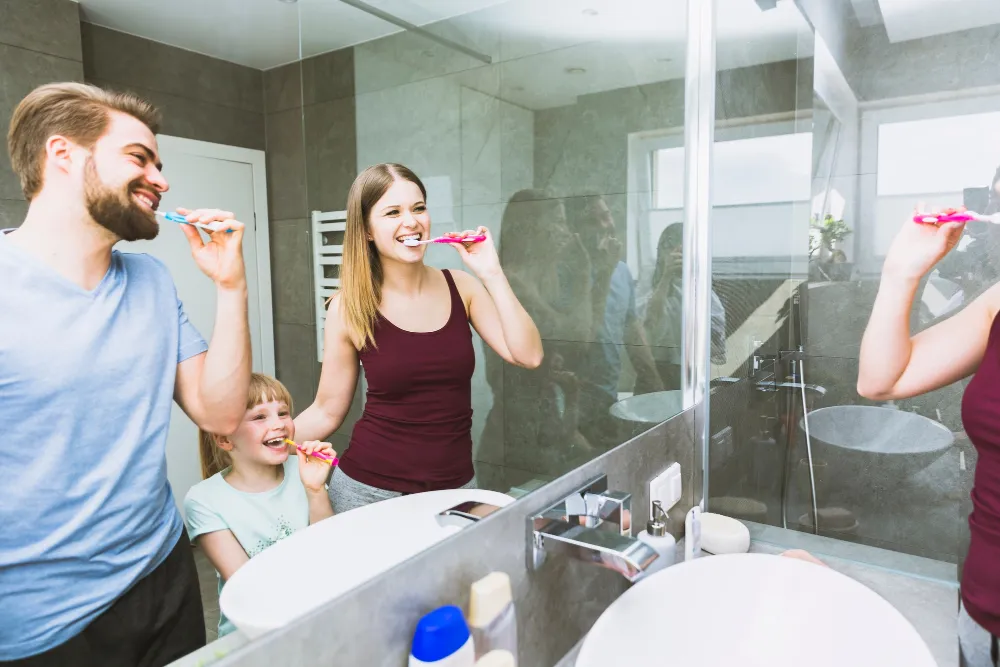
People reach for different tools to get this done—some stick with a manual toothbrush, while others prefer an electric toothbrush—but the broader routine, including technique, consistency, fluoride use, and interdental cleaning, matters more than any single device. A sustainable routine built from ordinary daily habits will always outperform reliance on one product or the occasional deep clean.
Why Daily Plaque Removal Matters
Plaque is a soft, bacterial film that forms continuously on teeth and along the gumline, no matter how clean a mouth might look. Left undisturbed, it can lead to tooth decay, gingivitis, bleeding gums, bad breath, and, if inflammation lingers, more advanced gum disease. A mouth’s appearance isn’t a reliable gauge of its health, since plaque tends to build up between teeth and below the gumline, areas that aren’t visible on casual inspection.
Sugar feeds the bacteria living in plaque, and those bacteria respond by producing acids that slowly wear away at enamel. Breaking this cycle through daily hygiene is almost always simpler, cheaper, and less invasive than treating decay or gum disease once it has taken hold.
It’s worth distinguishing between three related issues: plaque, which is soft and removable through everyday cleaning; calculus (tartar), hardened plaque that generally needs professional removal; and surface stains, which affect appearance but don’t necessarily signal decay.
The Core Brushing Routine
Frequency, duration, and timing
Dental organizations, including the American Dental Association and the CDC, generally recommend brushing twice daily for about two minutes with fluoride toothpaste.[1][2] Brushing before bed matters in particular, since saliva flow naturally drops off during sleep, weakening one of the mouth’s main defenses against acid and bacteria.[4] Pair that with a steady morning brushing session, and you’ve got a dependable rhythm. Brushing harder or faster won’t get you cleaner teeth—it’s more likely to irritate gums and wear down enamel over time.
Technique and coverage
An effective brushing routine should reach:
- Outer tooth surfaces
- Inner tooth surfaces
- Chewing surfaces
- The gumline
- The tongue, if breath freshness is a concern
Gentle, controlled movements beat aggressive scrubbing every time. Following a repeatable sequence—starting in the same spot and working systematically around the mouth—helps keep you from missing spots. Someone who brushes twice a day without any real pattern, for instance, might consistently skip the inner surfaces of their lower teeth simply because that area is awkward to reach and easy to rush past. A timer or a simple mental checklist can help close that kind of gap.
Choosing and Using Fluoride Toothpaste
Fluoride strengthens enamel and supports remineralization, helping teeth stand up better to acid damage. Unless a dental professional says otherwise, a fluoride toothpaste is a sensible default choice. Toothpaste strength and the right amount to use can vary by age and individual risk factors, so children’s formulations and prescription-strength options are best discussed directly with a dentist.
After brushing, spitting out the excess toothpaste rather than rinsing with water right away helps fluoride stay on the teeth longer.[4] Specialized toothpaste categories—whitening, sensitivity, herbal—aren’t automatically better than standard fluoride formulas. Anyone dealing with allergies, persistent sensitivity, dry mouth, braces, or a higher risk of decay should check labels carefully and talk to a dentist or pharmacist for guidance tailored to them.
Cleaning Between the Teeth
No toothbrush, however well-designed, can reliably clean the tight spaces between teeth. That’s where daily interdental cleaning comes in—floss, tape, interdental brushes, or water-based devices all fill this gap. The best tool isn’t some universally “ideal” option; it’s whichever one a person will actually use consistently and safely.
Technique still matters here: avoid snapping floss against the gums, curve it around each tooth, and work it gently beneath the gumline. Interdental brushes should slide in without being forced. A little bleeding can show up when inflamed gums are cleaned for the first time in a while, but bleeding that persists or gets worse is worth getting checked out by a professional. Both the ADA and NHS back daily interdental cleaning as a core part of a complete routine.[2][4]
Diet and Daily Habits That Affect Oral Health
How often you’re exposed to sugar matters more for oral health than the total amount consumed in a day. Frequent snacking or sipping sugary drinks—particularly between meals or right before bed—gives bacteria repeated windows to produce acid.[1][4] Water is a solid default drink between meals. Acidic foods and drinks can temporarily soften enamel, so it’s wise to wait a bit before brushing afterward and rinse with water in the meantime.
Routine adjustment: Try pairing sugary foods with mealtimes instead of spacing them out across the day, and switch to water after a sweetened drink rather than sipping it slowly over time.
Other factors—tobacco use, dry mouth caused by medication, and frequent nighttime eating—can also raise risk and may be worth raising with a dental professional.
Making the Routine Sustainable
Consistency, not intensity, is really the main hurdle. Keeping supplies in plain sight, tying brushing to an existing habit (like washing your face), using a timer for a while, and prepping interdental tools ahead of time can all help it stick. One practical example: someone who struggled with brushing at night finally got consistent simply by linking it to another automatic habit, like changing into pajamas. People with braces, implants, or limited dexterity may need different tools or techniques, which is best worked out with a dental professional.
When to seek care: Persistent gum bleeding, a toothache that won’t go away, loose teeth, facial swelling, ongoing bad breath, dry mouth, or suspected decay all call for a dental visit. Severe pain, swelling, fever, or trouble swallowing or breathing may need urgent attention.
Key Takeaways
- Brush twice daily with fluoride toothpaste for about two minutes.[1][2]
- Clean between teeth daily using whatever method fits comfortably into your routine.[2][4]
- Cut back on frequent sugar exposure, especially between meals and before bed.
- Spit rather than rinse right after brushing.[4]
- Seek professional care for symptoms that don’t resolve on their own.
Turning Advice Into a Routine
Oral health is built through ordinary, repeated actions, not occasional bursts of effort. Bringing together solid brushing habits, fluoride use, interdental cleaning, sensible dietary choices, and regular professional care adds up to a routine that holds up over the long run. Consider picking out one habit you’re currently missing—maybe the full two minutes of brushing, or daily interdental cleaning—and working it gradually into what you already do. The best oral-hygiene approach isn’t the most elaborate one; it’s the one that’s evidence-based, gentle, consistent, and suited to your own needs.