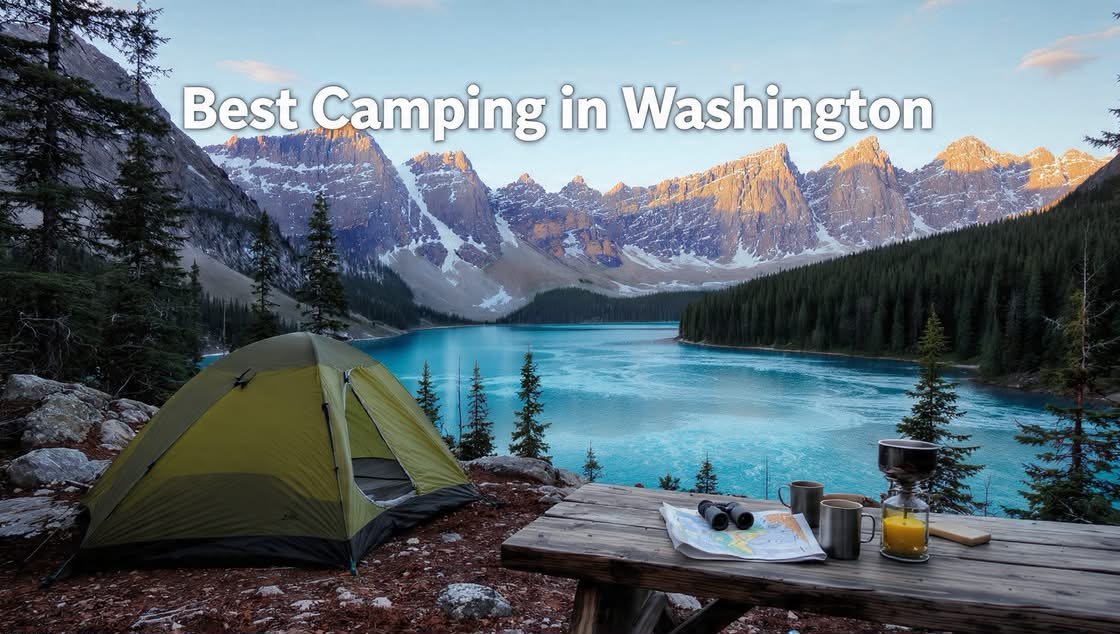
Best Camping in Washington State: 15 Top Sites for 2026
The single best camping in Washington state depends entirely on the experience you want. You come here for rainforest silence, raw ocean cliffs, or volcano views.
Kalaloch Campground on the Olympic Coast books out nine months in advance for a reason. The sound of waves crashing against driftwood defines the entire stay.
This guide ranks 15 distinct campgrounds across five distinct regions. You will find honest assessments for tent campers, families, and RV travelers looking to book now.
best camping in washington state
Washington splits its premium camping into three distinct worlds. You choose between the salty Pacific Coast, the jagged North Cascades, or the volcanic Mount Rainier.
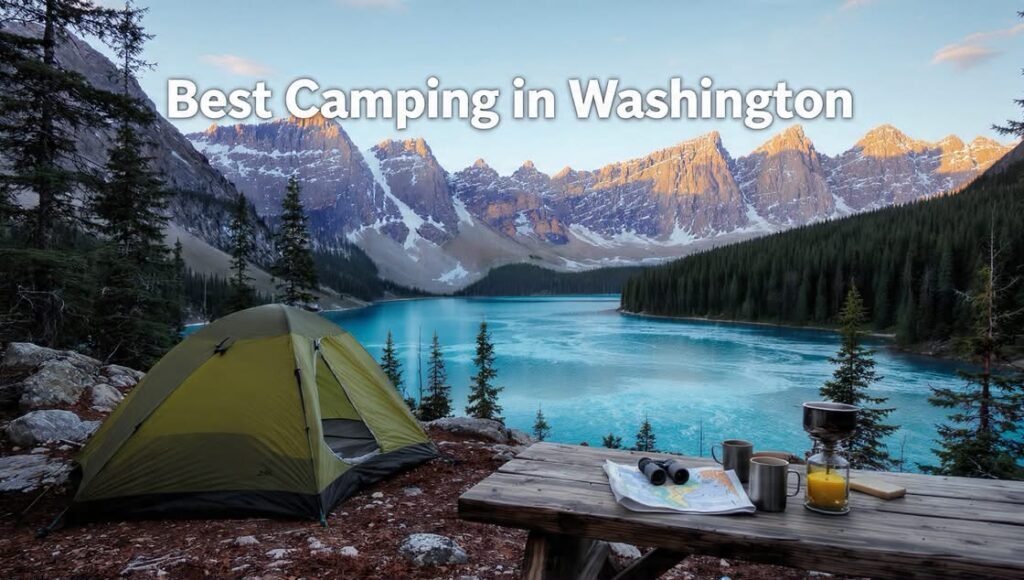
Kalaloch on the coast is the top pick for dramatic oceanfront camping. Colonial Creek in the North Cascades delivers the best lake-and-peak alpine scenery.
Reservations for all federal sites operate through Recreation.gov. State parks use the Washington State Parks website with a nine-month rolling window.
First-time campers should target state parks for more forgiving logistics. Experienced outdoor enthusiasts will prefer the remote federal sites in the backcountry.
Fire season now dictates the late-summer camping experience in the Cascades. Always check current Washington DNR burn restrictions before finalizing a trip.
Families with children prioritize swim-friendly lakes and flush toilets. Couples seeking romance should target the quieter, walk-in tent sites on the San Juan Islands.
Key Takeaway: Pick your ecosystem first, then book the specific site nine months out.
camping olympic national park
Olympic National Park is a sprawling, three-in-one ecosystem. You camp among glacier-topped mountains, temperate rainforests, or rugged wilderness coastline.
Kalaloch Campground is the only oceanfront option on the reservation system. Site A38 sits right on the bluff with an unobstructed sunset view.
The Hoh Campground places you inside the moss-draped Hall of Mosses. You will hear elk bugling from your tent in the fall months.
First-time campers find the Hoh easier due to dense forest wind protection. RV travelers must note Kalaloch’s upper loop is the only section with generator-friendly spacing.
Rain is a constant threat here even in peak July weeks. The limiting factor for couples is the lack of total privacy on these popular loops.
Insider Tip:
The Kalaloch Lodge nearby has a small mercantile store for firewood bundles. Do not bring your own firewood into the park from out of state.
According to the National Park Service, Olympic wilderness permits require bear canister use. This is a hard rule for the Sol Duc backcountry sites.
mount rainier national park camping
Mount Rainier National Park camping revolves around the iconic volcano. Your two best car-camping bases are Cougar Rock to the south and White River to the northeast.
White River Campground sits at 4,400 feet of elevation right at the Wonderland Trail. It feels wild and is a serious hiker’s base camp.
Cougar Rock Campground is more central and family-focused. It offers easy access to the Paradise visitor complex and its paved trails.
RV travelers face strict limits at both campgrounds due to tight roads. Tent campers will love the raw, glacier-view chill of White River’s D Loop.
The best season runs from late June through early September. Expect freezing nights even in August because of the high altitude.
Reservations vanish in seconds on Recreation.gov during the rolling window. Your backup is Ohanapecosh Campground on the southeast side in old-growth forest.
Important Safety and Conditions Notes for Mount Rainier:
Timed-entry reservations are required for the Paradise and Sunrise corridors during peak summer hours. Verify this specific rule on the NPS website before you drive to the gate.
north cascades national park camping
North Cascades National Park camping feels like the remote Alps. There is no major park lodge here, just raw peaks and the turquoise Diablo Lake.
Colonial Creek Campground is the crown jewel on the shore of Diablo Lake. Book the South Loop for quiet, forested sites right near the water’s edge.
The North Loop is better for RVs but gets significant highway noise. For pure silence, Newhalem Campground is a smaller, first-come, first-served option nearby.
This park punishes last-minute campers harder than anywhere else in Washington. Dispersed camping is virtually non-existent on the Highway 20 corridor.
Veteran tent campers know to target the walk-in sites in Colonial Creek’s South Loop. Families should know the lake is glacially cold and not ideal for swimming.
The drive from Seattle takes about 2.5 hours in clear conditions. You must stop at the Marblemount Ranger Station to check current backcountry trail conditions.
Key Takeaway: North Cascades delivers the best alpine payoff for tents but lacks easy RV hookups.
best washington state parks for camping
The Washington State Parks system offers better facilities than the federal parks. You often get showers, flush toilets, and kid-friendly interpretive programs.
Deception Pass State Park is the crown jewel with saltwater and freshwater access. Moran State Park on Orcas Island holds the best mountain-lake campsites in the state.
Cape Disappointment delivers two functioning lighthouses and dramatic bar-crossing views. The park system’s reservation window opens exactly nine months in advance.
Families should prioritize parks with designated swimming beaches and playgrounds. RV travelers will find many more electric and full-hookup sites at these parks.
Check the official Washington State Parks website for specific fire ban updates. The limiting factor for solo campers is the high density of large family groups.
You must purchase a Discover Pass to access any state park day-use area. The fee is separate from your nightly camping charge.
san juan islands camping
San Juan Islands camping requires a Washington State Ferries boat ride. This logistical hurdle keeps the crowds lighter and the experience more memorable.
San Juan County Park offers walk-in waterfront sites looking across to Canada. You will hear orcas breathing in the night if you time it right.
Moran State Park on Orcas Island has five freshwater lakes. The best sites are the rustic, tent-only platforms at Cascade Lake’s edge.
Reservations are ferociously competitive, especially for summer ferry space. You must book your vehicle ferry ticket weeks before you book the campsite.
Couples and romantic weekenders will find the island isolation worth the effort. First-time campers often underestimate the wind exposure on the west-facing bluffs.
Budget campers should know the round-trip ferry fare adds a significant base cost. Experienced kayak campers can access smaller marine trail sites on outer islands.
The general store in Friday Harbor is your last reliable resupply point. Do not arrive on a Sunday expecting to find ice and groceries easily.
deception pass state park camping
Deception Pass State Park is the most popular camping destination in the state system. The iconic bridge spans a churning tidal channel between Whidbey and Fidalgo islands.
The main campground sits in a classic Pacific Northwest forest of Douglas firs. Book the Quarry Pond loop for families who want calm, warm-water swimming.
The Cranberry Lake section provides direct access to a freshwater lake shoreline. RV travelers will appreciate the modern dump station and well-graded, paved interior roads.
Noise is the honest limitation here because of the Navy jet flyovers. The bridge itself is a massive tourist attraction, so isolation is not the draw.
First-time campers will find the flush toilets and interpretive center comforting. Experienced tent campers should look at the Bowman Bay side for quieter waterfront sites.
Saltwater shoreline sites book out a full nine months ahead. You must be online at 7 AM Pacific Time on the dot when the window opens.
Key Takeaway: Deception Pass is a state park masterpiece for families but not a solitude spot.
washington coast camping
Washington coast camping means sleeping to the sound of Pacific surf. The shoreline here is mostly wilderness, not condo towers, making it a unique experience.
Kalaloch Campground is the definitive choice on the central coast. Pacific Beach State Park offers a simpler, more compact oceanfront alternative further south.
The Ozette Triangle gives you a hike-in coastal experience with true isolation. You walk a three-mile boardwalk to reach the sand and petroglyphs.
RV travelers must prioritize Kalaloch because Pacific Beach is mostly a parking lot setup. Tent campers and couples will find the bluff spots at Kalaloch deeply romantic.
Never underestimate the fog and damp cold, even in late July. Budget campers should note Kalaloch’s site prices are slightly higher than other Olympic options.
Tidepooling at Beach 4 is non-negotiable during low tide. Always carry a tide chart and know when the water turns from ebb to flow.
hoh rainforest camping
The Hoh Rainforest Campground puts you inside a green cathedral of moss. It is the quietest, most humid, and most otherworldly campsite in the contiguous United States.
You camp right at the start of the Hoh River Trail. The sound of the river rushing over cobbles fills the entire campground loop.
There are only 72 sites and zero hookups here. RV travelers over 21 feet should pick a different base camp due to tight turnarounds.
First-time campers will find the dripping wet conditions challenging. Your tent must have a flawless rainfly and a groundsheet to stay dry.
The best months are July and August for a chance at dry skies. Experienced backpackers register for the Mount Olympus trailhead lottery from this very parking lot.
No cell service exists for 45 miles in any direction. Download your offline maps and notify someone of your travel plans before leaving Forks.
Insider Tip:
Book Loop A for the most sunlight penetration through the canopy. Loop C stays damp and dark all day, which makes drying gear impossible.
dispersed camping washington state
Dispersed camping is legal and free inside Washington’s National Forests. You bypass the crowded reservation system entirely by heading into the woods.
The best zones sit in the Mount Baker-Snoqualmie and Okanogan-Wenatchee National Forests. Forest Road 29 north of Skykomish is a classic pick for Seattle weekenders.
You will find zero facilities, no water, and no trash service. Pack out everything, including toilet paper, and dig a proper cat hole.
The US Forest Service restricts camping near developed trailheads and water sources. You must observe a 100-foot setback from any creek or lake.
RV travelers in big rigs should stick to established forest road pullouts. Turning a 30-foot trailer around on a narrow logging spur is a disaster.
A Discover Pass is not needed for USFS land. Free motor vehicle use maps are available online from the USFS website for navigation.
Key Takeaway: Dispersed camping requires self-sufficiency and a high-clearance vehicle in most zones.
best tent camping washington
Tent campers get access to the quietest, most scenic parts of Washington. You fit into small, walk-in sites that motorhomes cannot touch.
Colonial Creek South Loop walk-in sites sit right on Diablo Lake. Moran State Park primitive paddle-in sites let you sleep alone on an island.
White River D Loop has no generator noise under the stars. You hear only the crumbling of glaciers and the wind through subalpine firs.
The trade-off is dampness for your floorless floor gear. You absolutely need a sleeping pad with a high R-value of 5 or above here.
Couples will love the intimate seclusion of the Hoh’s smaller inner loops. Families should avoid these zones because kids need more consolidated flat ground.
Mice and mini-bears are aggressive in the national park tent sites. Never leave a crumb or an unsealed granola bar in your vestibule.
rv camping washington state
RV camping in Washington state works best on the coast and in state parks. The mountain roads in the Cascades are too narrow for big rigs.
Pacific Beach State Park is the top oceanfront spot with full hookups. Kalaloch’s A Loop is the only Olympic NP loop with generator-friendly spacing.
Lake Chelan State Park on the sunny east side is built for RVs. You get concrete pads, electric hookups, and easy access to a launch ramp.
Never trust GPS routing when driving an RV to mountain sites. Steep, single-lane forest roads with no turnaround can trap you for miles.
The limiting factor for family RV trips is the lack of sewer hookups in federal parks. You will need to move to a dump station every three days.
Booking lead time is the single most critical factor for an RV spot. Beachfront rig sites disappear the very morning the reservation window opens.
washington state park reservations
The Washington State Parks reservation system is predictable but ruthless. You book exactly nine months in advance starting at 7 AM Pacific Time.
Summer weekends disappear within the first hour for popular parks. Deception Pass, Moran, and Cape Disappointment are the fastest-selling sites in the system.
You absolutely must create an online account before the booking morning. Adding your vehicle info and camping preferences in advance saves crucial seconds.
First-time campers should target Sunday night arrivals for a softer landing. Saturday is the highest-demand day and often blocks the entire weekend view.
A Discover Pass is mandatory in addition to your site fee. Buy it at the gate or online to avoid a ticket on your windshield.
The cancellation policy is much more flexible than Recreation.gov’s. This allows experienced campers to snag last-minute spots others have released.
best lakeside camping washington
Lakeside camping defines the classic Pacific Northwest summer. You want a site that offers direct water access for kayaking or swimming.
Colonial Creek on Diablo Lake delivers the most stunning visual payoff. The turquoise water is backdropped by Colonial Peak straight from your tent.
Lake Wenatchee State Park on the drier east slopes guarantees sun. The sandy beach and shallow swimming area make it the family king.
Moran State Park’s Cascade Lake offers peaceful, motor-free paddling. First-time campers will find the calm, bath-like water in August perfect.
The glacial-fed lakes in the Cascades are brutally cold for swimming. Children often refuse to stay in the water for more than ten seconds.
RV travelers should focus on Lake Chelan or Lake Wenatchee for big-rig access. Alpine lakes like Diablo have tight roads and no hookups at the site.
Key Takeaway: For swimming, pick a state park lake on the east side of the mountains.
backcountry camping washington
Backcountry camping in Washington requires a permit and a bear canister. The payoff is solitude among the most pristine alpine meadows on the continent.
The Enchanted Valley in Olympic National Park is the top-tier choice. You walk 13 miles up the Quinault River to a historic chalet.
The Cascade Pass area in North Cascades National Park is a classic trek. You use a cross-country zone permit for the Sahale Glacier camp.
Timed-entry and backcountry permit lotteries run on Recreation.gov in spring. You must apply months before your trip for the peak August window.
Beginners should try the Ozette Triangle for a flat, coastal backcountry test. This is a nine-mile loop with no serious elevation gain.
Solo hikers need to carry a satellite communicator with GPS functions. There is zero cell signal in the deep valleys of the Olympic interior.
The National Park Service strictly enforces campfire bans above certain elevation lines. You rely on a camp stove and warm layers instead of a fire.
best time to camp in washington state
The best time to camp in Washington state is mid-July through late August. This window gives you the lowest chance of rain and open mountain roads.
The Pacific Coast is often clear and crisp in early September. The fog lifts, and the kids are back in school, leaving Kalaloch wonderfully empty.
June is a gamble in the Cascades due to lingering deep snowpack. Many high-altitude campgrounds like White River remain closed until late June.
First-time campers should not book a rainforest trip before July 4th. Cold, soaked gear can ruin a beginner’s confidence permanently.
The east side of the state near Winthrop is ideal in May and September. The dry, sunny climate makes it a shoulder-season refuge from west-side rain.
Wildfire smoke has become a critical August wild card in the Cascades. You must check the AQI forecast and USFS fire maps before heading east.
Key Takeaway: This is a planning-heavy destination where spontaneous trips fail.
Frequently Asked Questions About the Best Camping in Washington State
Where is the best camping in Washington state?
The best camping in Washington state is Olympic National Park for diverse landscapes or Colonial Creek for alpine lakes.
Kalaloch Campground is the top pick for classic oceanfront camping with breathtaking sunset views.
How far in advance do you need to book camping in Washington?
You must book state park campsites exactly nine months in advance at 7 AM sharp.
National park sites on Recreation.gov open on a six-month rolling window and fill instantly for summer.
Do you need a Discover Pass to camp in Washington state parks?
Yes, a Discover Pass is required for vehicle access to all Washington state parks.
The camping fee covers your tent pad, but you still need the pass for your car.
What is the best month to camp in Washington?
August is the single best month for guaranteed warmth and road access to volcanoes.
September is the secret best month for the coast, with calm weather and no crowds.
Is dispersed camping legal in Washington state?
Yes, dispersed camping is legal and free within Washington’s National Forests.
You must follow strict Leave No Trace rules and stay 100 feet from water sources.
Can you camp on the beach in Washington?
Yes, you can camp on the beach at specific designated spots like Ozette or Second Beach.
Kalaloch Campground sits on a bluff directly above the sand, offering legal beach sleeping.
Washington camping redefines what a summer trip looks like in the Lower 48. You trade warm desert nights for the crash of ocean waves and the silence of ancient trees. The trade-off is the mandatory planning overhead and the real risk of rain.
Do not wait until spring to plan a summer trip here. Open the Washington State Parks reservation page or Recreation.gov portal immediately. Check the specific loop map and memorize the day the window unlocks.
Campground fees, fire bans, and timed-entry permits change without notice. Verify the official agency site right before you lock in your booking. The right site, secured nine months out, delivers the best camping experience in the country.