Whoo Korean Skincare: Your Definitive 2026 Buyer’s Guide
Whoo skincare, formally known as The History of Whoo, is a South Korean luxury beauty brand built on the concept of hanbang: traditional Korean herbal medicine reformulated for modern cosmetic use. It is one of the best-selling prestige skincare brands in Asia and has steadily expanded its presence globally, offering multi-step regimens at price points that rival French luxury houses.
The brand was launched in 2003 by LG H&H, one of Korea’s largest personal care conglomerates, and its formulations draw from a documented archive of royal court medicinal recipes used during the Joseon dynasty (1392 to 1897). According to a 2021 report in the Journal of Ethnopharmacology, many hanbang botanical ingredients used in traditional Korean court medicine, including Panax ginseng root extract and Cornus officinalis fruit extract, have measurable bioactive compounds with antioxidant properties, though human topical clinical trial evidence for their cosmetic applications remains preliminary.
This guide covers everything a buyer in 2026 genuinely needs to know: what the brand’s signature ingredients actually are and what the evidence says, which product lines serve which skin concerns, how to build a structured routine using Whoo products, who should approach the formulations with caution, and whether the price reflects real formulation quality or artful heritage marketing.
What Is Whoo Skincare
Whoo skincare is a luxury Korean cosmetic brand whose full name is The History of Whoo, developed and manufactured by LG H&H and built around the concept of adapting traditional Joseon royal court medicine into modern skincare formulations.
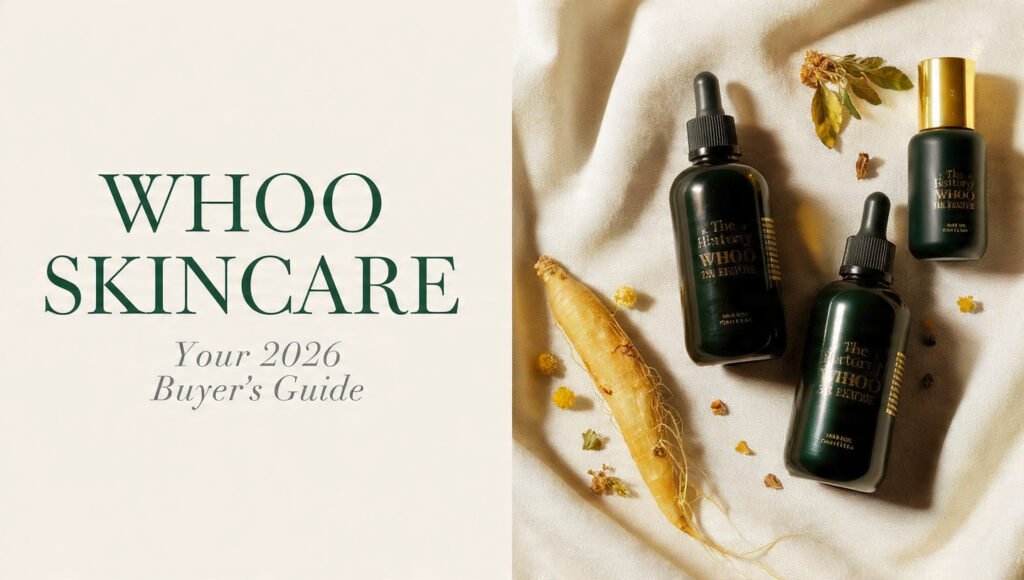
The brand holds a distinctive position in the Korean beauty market. It is not a budget K-beauty brand or a trendy sheet-mask line. It sits firmly in the prestige segment, competing in price and positioning with brands like Sulwhasoo (AmorePacific), La Prairie, and Sisley. The aesthetic is opulent: heavy lacquered packaging with gold accents, inspired by the ceremonial objects of the Joseon court.
What makes it different from other luxury brands is the hanbang philosophy at its core. Every major product line centers on a named blend of traditional Korean medicinal herbs, each with a specific therapeutic heritage in Korean court medicine. The brand’s product naming, packaging, and marketing all reference the Joseon royal women who were said to have used predecessor formulas to maintain their skin.
| Feature | The History of Whoo |
|---|---|
| Founded | 2003 |
| Parent Company | LG H&H |
| Price Tier | Luxury / Prestige |
| Core Philosophy | Hanbang (Korean traditional herbal medicine) |
| Primary Markets | South Korea, China, Southeast Asia, Global |
| Key Competitor | Sulwhasoo (AmorePacific) |
| Main Product Format | Multi-step Korean skincare system |
For someone new to the brand, the sheer number of product lines can feel overwhelming. The good news is that each line serves a clearly defined skin concern, which makes selection more straightforward once you understand the system.
The History of Whoo Skincare and Its Korean Royal Origins
The history of whoo skincare traces directly to the beauty rituals documented in Joseon dynasty royal archives, where court physicians prescribed herbal preparations not just for health but for the preservation and appearance of the skin of court women and royalty.
LG H&H’s research team developed The History of Whoo by working with traditional Korean medicine scholars and reviewing historical court documents to identify which herbal preparations were most closely associated with skin care. The brand claims that formulations like its Gongjinhyang complex are based on prescriptions originally recorded for use in the Joseon court, though the modern cosmetic versions are substantially reformulated for stability, safety, and INCI-compliant manufacturing.
The Joseon dynasty is a meaningful reference point because it left an unusually well-documented record of court life, including detailed pharmacopoeias (the Dongui Bogam, compiled in 1613 by court physician Heo Jun, is the most referenced). This text catalogued hundreds of botanical and mineral ingredients used in medicine and, by extension, personal care. The History of Whoo draws its branding and ingredient selection from this lineage.
It is worth being precise here: the brand’s formulations are modern cosmetic products manufactured to contemporary regulatory standards. They are not pharmaceutical preparations or traditional medicine products. The heritage serves as an ingredient-sourcing and brand narrative framework, not a medical claim.
Key Takeaway: The History of Whoo is a modern luxury cosmetic brand inspired by Joseon dynasty royal court herbalism, but its products are formulated and regulated as contemporary cosmetics, not traditional medicine products.
What Is Hanbang Skincare
Hanbang skincare refers to Korean beauty products formulated with ingredients rooted in hanbang, the traditional Korean medical system that is closely related to traditional Chinese medicine (TCM) but distinct in its ingredient selection, preparation methods, and philosophical framework.
The word hanbang (한방) literally translates to “Korean medicine” and encompasses the use of plant, mineral, and animal-derived materials in therapeutic and preventive applications. In the skincare context, hanbang most commonly refers to formulations containing fermented herbal extracts, ginseng root preparations, fruit-derived botanical extracts, and complex multi-ingredient herbal blends developed in accordance with documented traditional recipes.
Think of hanbang skincare the way you would think of Ayurvedic-inspired beauty in the Indian market or French pharmacy skincare: a regional traditional practice brought into modern cosmetic formulation with varying degrees of scientific substantiation. The ingredients are real, many have measurable bioactive compounds, and some have genuine preliminary evidence for specific functions. What requires scrutiny is when marketing conflates traditional use with proven clinical efficacy in human subjects.
According to a 2020 review published in the Journal of Ethnopharmacology, many Korean medicinal plants used in hanbang preparations, including Panax ginseng, Paeonia lactiflora (white peony), and Glycyrrhiza glabra (licorice root), contain bioactive polyphenols, saponins, and flavonoids with measurable antioxidant and anti-inflammatory activity in laboratory settings. The review noted that human clinical trial evidence for these specific effects in topical cosmetic application remains limited and that most efficacy claims are extrapolated from in vitro or oral-administration studies.
That distinction matters when you are spending several hundred dollars on a skincare line. The ingredients are interesting and the bioactive chemistry is real. The clinical evidence for specific cosmetic outcomes is where the honest answer is “we have promising early data, not a body of randomized controlled trials.”
Key Hanbang Ingredients in Whoo Products
The key hanbang ingredients in Whoo products span multiple botanical and animal-derived compounds, each with documented traditional use and varying levels of modern cosmetic chemistry evidence.
Here are the primary ingredients you will encounter across Whoo’s product lines, with their INCI names and evidence status:
| Ingredient (Common Name) | INCI Name | Primary Claimed Function | Evidence Quality (Topical Cosmetic) |
|---|---|---|---|
| Korean red ginseng | Panax ginseng root extract | Antioxidant, anti-aging | Preliminary; in vitro and some small human studies |
| Asiatic cornelian cherry | Cornus officinalis fruit extract | Antioxidant, skin conditioning | Preliminary; mainly in vitro |
| Siberian ginseng | Acanthopanax senticosus root extract | Adaptogenic, anti-inflammatory | Preliminary; animal model data |
| Licorice root | Glycyrrhiza glabra root extract | Skin brightening, anti-inflammatory | Moderate; some human clinical trial support for glabridin’s effect on tyrosinase |
| White peony | Paeonia lactiflora root extract | Anti-inflammatory, brightening | Preliminary; in vitro |
| Honey | Mel | Humectant, antimicrobial | Moderate; clinical evidence for wound healing, limited for cosmetic anti-aging |
| Korean foxglove | Rehmannia glutinosa root extract | Antioxidant | Preliminary; in vitro only |
| Wolfberry / goji | Lycium chinense fruit extract | Antioxidant | Preliminary; in vitro |
The honest picture across this table is that most Whoo hanbang ingredients sit in the “promising in vitro findings, limited human topical clinical trial evidence” category. Licorice root extract is the strongest outlier, with published human data supporting glabridin’s inhibition of tyrosinase (the enzyme involved in melanin synthesis) at concentrations typically between 0.5% and 1% in formulation.
For people with Fitzpatrick skin types IV, V, and VI, the tyrosinase-inhibiting effect of licorice root extract can be a meaningful benefit for post-inflammatory hyperpigmentation management. However, it is also a compound to monitor if skin-brightening is not a desired outcome, as prolonged use at higher concentrations may affect melanin distribution unevenly in some deeper skin tones.
Panax Ginseng and Ginsenosides in Skincare
Panax ginseng root extract is the single most recognized ingredient in The History of Whoo’s formulations, and its active compounds, known collectively as ginsenosides, have a real but carefully qualified evidence base for cosmetic skin applications.
Ginsenosides are a class of triterpenoid saponins found almost exclusively in the genus Panax. Over 100 ginsenoside subtypes have been identified, with Rb1, Rg1, Rg3, and Rg5 receiving the most research attention for potential skin-related activity. Their molecular weights vary considerably, and this variation affects how well they can interact with skin structures.
A 2020 study published in the Journal of Ginseng Research examined ginsenoside Rb1 and Rg3 in cell culture models and found evidence of antioxidant activity via free radical scavenging, as well as some signal for stimulation of collagen type I synthesis pathways in human dermal fibroblasts. The study authors were explicit that these were in vitro findings and that translation to clinical skin outcomes in live human subjects required further study.
This is where the conversation has to be honest. Free radical scavenging in a cell model and measurable wrinkle reduction in a 52-week randomized controlled trial are two very different things. The ginsenoside research is real. The gap between “bioactive in a petri dish” and “proven to reduce visible wrinkle depth in humans” is also real.
What this means practically: ginsenoside-containing formulations can reasonably be considered a meaningful antioxidant ingredient, comparable in positioning to green tea polyphenols (EGCG) or resveratrol, with similarly promising but not definitive clinical outcomes at the cosmetic level.
Quick Tip:
- If antioxidant ingredient science matters to your decision, ginsenosides are a legitimate but preliminary-evidence player in that category.
- For well-established topical antioxidant evidence, ascorbic acid (vitamin C) at 10% to 20% concentration has the strongest human clinical trial base per a 2017 review in the Journal of the American Academy of Dermatology.
- Ginsenoside-containing products can be layered with ascorbic acid formulations if applied in pH-appropriate sequence (lower pH vitamin C first).
Key Takeaway: Ginsenosides in Panax ginseng root extract show real antioxidant activity in laboratory settings, but human clinical trial evidence for specific cosmetic skin outcomes is preliminary. This makes them an interesting but not yet clinically definitive ingredient.
The Whoo Gongjinhyang Product Line
The Whoo Gongjinhyang line is the brand’s flagship collection and the entry point most commonly recommended for people new to The History of Whoo.
Gongjinhyang (공진향) translates loosely to “tribute incense to the palace” and references a specific traditional herbal complex in the Joseon pharmacopoeial tradition. The line centers on the Gongjinhyang Soo Complex, which includes Panax ginseng root extract, Cornus officinalis fruit extract, and honey extract (mel) as its primary actives, along with additional botanical supporting ingredients.
The product range within this line covers a full multi-step routine: a first essence (Soo Yeon Cream), a softening toner, a refining emulsion, a concentrated serum, an eye cream, and a rich cream formula. The Gongjinhyang Soo Yeon Cream is one of the brand’s most recognized individual products globally. It delivers a deeply emollient texture suitable for dry to normal skin and functions primarily as an occlusive-leaning moisturizer with botanical active components.
For someone building their first Whoo routine, the Gongjinhyang line is the most accessible. It sits at a slightly lower price point than the Cheongidan or Bichup lines and offers a complete system without requiring pieces from multiple lines.
| Product | Primary Function | Best Skin Type |
|---|---|---|
| Gongjinhyang Soo Yeon Cream | Rich occlusive moisturizer | Dry, normal |
| Gongjinhyang Soo Yeon Eye Cream | Hydrating eye treatment | All types |
| Gongjinhyang Soo Softener | Prep toner, hydration layering | Dry, normal |
| Gongjinhyang Soo Emulsion | Lightweight moisture layer | Normal, combination |
| Gongjinhyang Soo Serum | Concentrated botanical active | Dry, aging |
People with oily skin types should note that the creamier textures in this line, particularly the Soo Yeon Cream, can feel heavy. Those individuals may find better compatibility with the lighter-textured formulations in the Bichup line.
The Whoo Bichup Product Line
The Whoo Bichup line is the brand’s most recognized collection for skin hydration and barrier-focused care, built around the Bichup Soon Hwan Complex, which the brand describes as a “circular energy” herbal blend designed to reinforce skin resilience.
The Bichup So Cream is the most famous individual product in The History of Whoo’s entire catalog. It is a cream with a distinctive formula that includes an extended list of botanical extracts alongside hyaluronic acid (sodium hyaluronate) and honey extract (mel). The texture sits between a gel-cream and a full occlusive cream, making it more versatile across skin types than the richer Gongjinhyang cream.
From a cosmetic chemistry standpoint, sodium hyaluronate in this formulation functions as a humectant, drawing water toward the upper layers of the stratum corneum. This is one of the most evidence-backed functions in the entire formula. A 2021 review in the Journal of Cosmetic Dermatology confirmed that topical sodium hyaluronate at concentrations between 0.1% and 2% produces measurable increases in skin hydration within four weeks of consistent twice-daily application.
The botanical components of the Soon Hwan Complex serve primarily as antioxidant and skin-conditioning agents. Their concentration in the formula is proprietary and not publicly disclosed by LG H&H, which means evidence-based efficacy at the concentration present cannot be independently verified.
The Bichup First Care Moisture Anti-Aging Essence is another standout product in this line. It functions as a “first essence,” a category unique to Korean skincare that sits between toner and serum in layering order and is designed to be the first active product applied to cleansed skin. The format supports better subsequent product absorption by preparing the stratum corneum.
For people with normal to combination skin seeking a Whoo entry point, the Bichup So Cream and Bichup First Care Essence are frequently cited by board-certified dermatologists specializing in K-beauty formulations as the most straightforward starting duo in the catalog.
Whoo Cheongidan and Myeongan Lines
The Whoo Cheongidan line and Whoo Myeongan line represent the brand’s most concentrated and expensive offerings, positioned for anti-aging and intensive skin renewal goals.
The Cheongidan (청단) line is built around what the brand calls the Hwayul Complex, which features a formulation that includes deer antler velvet extract alongside a concentrated selection of ginseng and botanical actives. Deer antler velvet extract has a long history in traditional East Asian medicine as an adaptogenic and restorative substance. In the topical cosmetic context, published evidence for specific anti-aging outcomes in human subjects is extremely limited. A small number of in vitro studies have examined deer antler-derived compounds for collagen-supportive signaling, but these findings have not been replicated in peer-reviewed human randomized controlled trials as of 2026.
The Cheongidan Hwayul Cream is the flagship product of this line, and it carries one of the highest price points in the entire Whoo catalog. For consumers, the honest assessment is that the premium here is carried substantially by the traditional prestige of deer antler velvet in Korean medicine and the extreme luxury of the formulation experience, not by a strong human clinical trial evidence base for the star ingredient.
The Myeongan (명안) line takes a different angle, centering on skin brightening and even-tone goals. Its key ingredient blend incorporates licorice root extract (Glycyrrhiza glabra root extract), pearl extract (Conchiorin powder), and additional botanical brightening agents. As noted in the ingredient section above, licorice root’s glabridin fraction has meaningful published evidence for tyrosinase inhibition, making the Myeongan line the strongest evidence-backed choice within the Whoo catalog for people specifically targeting hyperpigmentation.
People with Fitzpatrick types IV through VI considering the Myeongan line for post-inflammatory hyperpigmentation support should know that board-certified dermatologists typically recommend pairing tyrosinase-inhibiting topicals with daily SPF use of at least SPF 30, since UV exposure consistently restimulates melanin production and counteracts brightening ingredient effects.
Key Takeaway: The Myeongan line has the strongest ingredient evidence within the Whoo catalog for hyperpigmentation goals, thanks to licorice root’s documented tyrosinase-inhibiting effect. The Cheongidan line’s premium is driven more by heritage than by human clinical trial evidence for deer antler velvet extract.
Whoo Skincare Routine: Step by Step
A proper whoo skincare routine follows the Korean multi-step layering principle: apply products from thinnest to thickest texture, with hydration-building steps preceding occlusive or treatment steps.
Think of layering skincare products the way you would build a winter outfit. The base layer (your lightest hydrating step) needs to go on first, directly against skin. Heavier layers go on top. Put the thick wool coat on before the undershirt and the system breaks down completely.
Here is a structured Whoo morning and evening routine:
Morning Routine with Whoo Products:
- Gentle cleanser (not a Whoo-specific step; use a low-pH sulfate-free cleanser appropriate for your skin type)
- Bichup First Care Moisture Anti-Aging Essence (first essence; apply to damp skin immediately after cleansing, pat gently)
- Gongjinhyang Soo Softener or Bichup Soo Yeon Toner (softening toner layer; supports barrier preparation)
- Gongjinhyang Soo Serum or Cheongidan Hwayul Eye Serum (concentrated treatment layer; apply before heavier creams)
- Gongjinhyang Soo Emulsion (lightweight emulsion layer; seals in previous steps)
- Bichup So Cream or Gongjinhyang Soo Yeon Cream (moisturizer; AM use should be the lighter formula)
- Broad-spectrum SPF 30 or higher sunscreen (not Whoo-branded; apply as final morning step)
Evening Routine with Whoo Products:
- Oil-based or micellar cleanser (first cleanse, removes SPF and product buildup)
- Gentle water-based cleanser (second cleanse)
- Bichup First Care Moisture Anti-Aging Essence
- Treatment toner
- Concentrated serum or ampoule
- Eye cream
- Richer moisturizer or sleeping mask (PM is the appropriate time for the richest occlusive formulas)
The American Academy of Dermatology recommends that everyone, regardless of skincare routine complexity, include a broad-spectrum SPF 30 sunscreen every morning as a non-negotiable skin protection step. This applies regardless of which skincare line you use. No SPF ingredient is present in Whoo moisturizers as formulated.
Whoo Skincare for Dry and Mature Skin
Whoo skincare for dry and mature skin represents the brand’s strongest audience fit, with formulation textures and ingredient selections that align well with the hydration and barrier-support needs of skin experiencing age-related lipid decline.
As skin ages, sebaceous gland activity decreases and the skin’s natural synthesis of ceramides, fatty acids, and cholesterol, the three lipid classes that form the mortar of the stratum corneum, declines measurably. According to the Journal of Investigative Dermatology, transepidermal water loss (TEWL) increases with age as this lipid composition shifts, resulting in the drier, more reactive surface texture many people over 40 recognize.
The Gongjinhyang and Bichup lines address this through emollient and occlusive-leaning formulations. The honey extract (mel) present in multiple Whoo products functions as a humectant, drawing atmospheric moisture toward the skin surface, and has mild film-forming properties that reduce TEWL. Sodium hyaluronate, present in the Bichup line, adds measurable short-term hydration to the upper layers of the stratum corneum.
For women experiencing perimenopausal or postmenopausal skin changes, specifically accelerated collagen loss and increased TEWL driven by estrogen decline, the richer formulations in the Cheongidan and Gongjinhyang lines may provide a meaningful hydration experience. However, it bears stating clearly: no topical cosmetic product can replicate the effect of estrogen on dermal collagen synthesis. What these products can do is meaningfully manage surface-level dryness and provide antioxidant ingredient support.
| Skin Concern | Recommended Whoo Line | Key Products |
|---|---|---|
| Dry, dehydrated skin | Gongjinhyang Soo | Soo Yeon Cream, Soo Softener |
| Dry, aging skin | Cheongidan Hwayul | Hwayul Cream, Hwayul Eye Cream |
| Loss of firmness | Cheongidan or Bichup | Cheongidan Hwayul Serum |
| Dullness in mature skin | Myeongan | Myeongan Lotion, Myeongan Cream |
Whoo Skincare for Sensitive and Combination Skin
Whoo skincare for sensitive and combination skin requires a more selective approach than the brand’s own product-matching guides suggest, and the reason comes down to formulation complexity.
Sensitive skin, meaning skin with a consistently reactive pattern of redness, stinging, or flushing in response to new products, is characterized by a compromised or lower-threshold skin barrier. When a barrier is already reactive, introducing a complex botanical herbal formula with multiple potential sensitizers at once is a meaningful risk. The History of Whoo’s formulations contain a high number of distinct botanical extracts per product, and while each individual ingredient may be safe at standard concentrations, the cumulative sensitization potential of a 15-ingredient herbal complex has not been systematically studied.
For combination skin (oily in the T-zone, normal to dry on the cheeks), the primary challenge with Whoo is texture matching. The brand’s richest formulas, the Gongjinhyang Soo Yeon Cream and the Cheongidan Hwayul Cream, are genuinely too heavy for oily or combination-oily T-zones and may contribute to clogged pores in those areas.
The Bichup So Cream is the most versatile texture in the catalog for combination skin. Its gel-cream consistency delivers hydration without the heavy occlusion of the thicker formulas. For the T-zone specifically, using a lighter step (the Bichup emulsion or skipping the cream layer entirely in that zone) reduces the risk of congestion.
For people with self-described sensitive skin who want to try Whoo products:
- Begin with a single product, not a full system.
- Perform a patch test on the inner arm for 48 to 72 hours before applying to the face.
- If a reaction occurs (redness, itching, stinging, swelling), discontinue use and, if the reaction persists beyond 72 hours or involves significant swelling, consult a board-certified dermatologist or allergist who can perform formal patch testing to identify the specific sensitizing component.
Key Takeaway: Combination and sensitive skin types need to approach Whoo’s complex botanical formulas selectively, starting with patch testing and lighter textures like the Bichup So Cream rather than the brand’s richest occlusive formulas.
Fragrance and Sensitization Risk in Whoo Skincare
Fragrance and sensitization risk is one of the most practically important things to understand about The History of Whoo before purchasing, and it is the topic most consistently overlooked in competing reviews.
The History of Whoo products are not fragrance-free. The brand’s aesthetic includes a distinctive, complex scent profile that is part of its luxury positioning. This scent comes from a combination of fragrance components (listed on INCI declarations as “Parfum” or “Fragrance”) and the natural aromatic compounds present in the brand’s extensive botanical extract blends.
The American Academy of Dermatology identifies fragrance as one of the most common causes of contact allergic dermatitis from cosmetic products, affecting an estimated 1% to 4% of the general population with allergy rates higher in people with atopic dermatitis or existing skin barrier dysfunction.
Complex botanical extracts that are common in hanbang formulations, including members of the Asteraceae family and high-concentration essential oil-containing plants, also carry individual sensitization potential independent of the listed fragrance ingredient. The cumulative load of aromatic botanical compounds across a full multi-step Whoo routine can be substantial.
Who should be specifically cautious:
- People with a confirmed fragrance allergy or sensitivity (patch-test confirmed or clinically diagnosed contact dermatitis)
- People with atopic dermatitis (eczema), whose barrier dysfunction makes them more vulnerable to sensitization
- People with rosacea, particularly the erythematotelangiectatic subtype, where fragrance compounds can trigger flushing and vasodilation
- People with perioral dermatitis, which is frequently exacerbated by highly fragranced or botanically complex topicals
- Anyone who has experienced stinging, burning, or redness from other luxury botanical skincare brands
If you are in any of these groups and remain interested in The History of Whoo, the realistic path is a consultation with a board-certified dermatologist who can refer you to a certified patch test panel, specifically the North American Standard Series or the extended cosmetic series, to identify your specific allergens before committing to a high-fragrance formulation system.
Is Whoo Skincare Pregnancy Safe
Whoo skincare pregnancy safety cannot be confirmed across the brand’s formulation range, and the complexity of hanbang ingredient blends means that a blanket safety assessment for pregnancy and nursing is not possible.
This is not a statement unique to Whoo. Most complex botanical skincare products fall into the same category: not enough pregnancy-specific safety data exists for many individual herbal extracts to make a definitive recommendation. The FDA does not require cosmetic manufacturers to submit safety data before bringing products to market, meaning the absence of a pregnancy warning on packaging does not constitute evidence of safety during pregnancy.
Specific ingredients within Whoo formulations that warrant caution during pregnancy and nursing:
- Panax ginseng root extract: Oral ginsenoside supplementation has been associated with potential hormonal activity in some animal studies. Topical cosmetic exposure represents a far lower dose, but the American College of Obstetricians and Gynecologists advises caution with all ginseng-containing products during pregnancy, particularly in the first trimester.
- Deer antler velvet extract (Cheongidan line): Insufficient human data exists for topical safety in pregnancy. Traditional use context does not substitute for gestational safety evidence.
- High-concentration botanical extracts with unknown estrogenic activity: Several plants in hanbang tradition, including Paeonia lactiflora (white peony), have demonstrated weak estrogenic activity in in vitro models. Topical cosmetic concentrations are unlikely to produce systemic effects, but published pregnancy-specific topical safety data is absent.
The practical guidance is direct: if you are pregnant or nursing, consult your obstetric provider or midwife before using complex multi-ingredient botanical skincare systems. Bring the product’s ingredient list (INCI format) to that conversation. Simpler formulations with better-characterized ingredient safety profiles represent a lower-uncertainty choice during this period.
Is Whoo Skincare Worth the Price
Whether whoo skincare is worth the price depends on what you are specifically paying for and whether that aligns with your skin goals and values, because the formulations deliver genuine quality in some areas and marketing-elevated premiums in others.
The case for the value: Whoo formulations are genuinely well-made cosmetic products with sophisticated textures, carefully sourced botanical ingredients, and a consistent performance track record for delivering hydration and sensory experience to dry and mature skin types. The Bichup So Cream, in particular, has earned its reputation in multiple independent beauty publication assessments for its skin-feel, texture, and consistent short-term hydration results. The packaging and product experience are genuinely luxurious at a level that competes with European prestige brands.
The case for scrutiny: A meaningful portion of the price reflects brand heritage, ceremonial packaging, and the prestige positioning of hanbang ingredients whose topical clinical evidence is preliminary rather than definitive. If you are paying for proven wrinkle reduction at a cellular-repair level, the evidence base at this price point does not clearly outperform well-formulated mid-range brands that use ingredients with stronger human clinical trial support (such as retinol, ascorbic acid, or azelaic acid).
| Consideration | Assessment |
|---|---|
| Formulation quality | High; well-stabilized emulsions, sophisticated textures |
| Ingredient evidence (hanbang) | Preliminary to moderate; not RCT-definitive |
| Hydration performance | Strong; supported by sodium hyaluronate and emollient-rich bases |
| Anti-aging evidence | Preliminary for most signature ingredients |
| Fragrance profile | Present; not suitable for fragrance-sensitive users |
| Price-to-evidence ratio | Moderate to high premium; partially heritage-driven |
| Luxury experience | Genuinely exceptional |
Compared to Sulwhasoo, which uses a similar hanbang philosophy at comparable price points, The History of Whoo leans slightly richer in texture and higher in price for its top-tier lines. Sulwhasoo’s First Care Activating Serum has a slightly larger body of independent discussion in dermatology-adjacent literature but the two brands are genuinely comparable in their evidence situation: high-quality luxury formulations with botanically interesting ingredients and a preliminary rather than definitive clinical evidence base.
Key Takeaway: Whoo skincare delivers genuine luxury formulation quality and reliable hydration performance, but a significant portion of the price reflects heritage prestige rather than ingredients with definitive human clinical trial evidence for anti-aging outcomes.
Where to Buy Whoo Skincare and How to Spot Fakes
Whoo skincare is available through several legitimate retail channels in 2026, and counterfeit products are a real concern given the brand’s price points and global demand.
Authorized retail channels include The History of Whoo’s own brand website, LG H&H-authorized department store counters (including Nordstrom, Neiman Marcus, and select international department stores), official brand flagship stores in South Korea, and authorized Korean beauty retailers with documented LG H&H wholesale agreements.
Gray market purchasing (unauthorized third-party sellers, some marketplace listings on global platforms) carries real counterfeit risk at this price tier. Counterfeit luxury Korean skincare products have been documented across major e-commerce marketplaces, and a counterfeit hanbang formulation presents not just a waste-of-money concern but a potential skin safety concern given that counterfeit products have been found to contain unlisted ingredients, incorrect concentrations, or no active ingredients at all.
How to verify authenticity:
- Purchase only from the brand’s official website or from its named authorized retail partners.
- Check for a holographic authenticity sticker on the product packaging. Whoo uses authentication labels on most products. Examine the sticker for print quality and reflective elements.
- Verify the batch code on the packaging against the brand’s official batch verification system (available through the LG H&H official channels in most markets).
- Examine the INCI ingredient list on the packaging. It should appear in the local language of the market you are purchasing from, plus English. Vague or missing ingredient lists are a red flag.
- Compare the product scent, texture, and packaging weight with independent reviewer documentation of authentic product experience. Significant discrepancies in scent profile or texture compared to documented authentic samples warrant return or reporting.
For first-time buyers, purchasing directly through the brand’s official website or through an authorized department store counter provides the cleanest path to guaranteed authenticity and access to brand-provided guidance on product selection for your skin type.
Frequently Asked Questions About Whoo Skincare
What is The History of Whoo and who makes it?
The History of Whoo is a luxury Korean skincare brand developed and manufactured by LG H&H, one of South Korea’s largest personal care companies.
The brand was launched in 2003 and is built around hanbang, the Korean traditional herbal medicine system, drawing on documented Joseon dynasty royal court recipes for its formulation inspiration.
It competes in the prestige skincare segment alongside brands like Sulwhasoo and La Prairie.
What are the best whoo skincare products for beginners?
The Bichup First Care Moisture Anti-Aging Essence and the Bichup So Cream are the most recommended starting points for people new to the brand.
These two products deliver the brand’s core hydration benefits in textures that suit a wider range of skin types than the brand’s richest creams.
For beginners who also want to target dullness or uneven skin tone, adding a product from the Myeongan line gives access to the brand’s licorice root extract-based brightening formulation.
Is whoo skincare good for anti-aging?
Whoo skincare’s anti-aging claims rest primarily on hanbang ingredients like ginsenosides from Panax ginseng root extract, which have shown antioxidant activity and preliminary collagen-supportive signaling in in vitro studies.
Human clinical trial evidence for specific anti-aging outcomes, such as measurable wrinkle reduction or increased dermal collagen density, from these specific botanical ingredients in topical cosmetic application remains preliminary as of 2026.
For people who want the most evidence-backed anti-aging topical ingredients, retinol (0.3% to 1%) and stabilized ascorbic acid (10% to 20%) carry significantly stronger human randomized controlled trial evidence, though they can be used alongside Whoo’s hydration-focused formulations.
Can people with sensitive skin use whoo skincare?
People with sensitive skin can potentially use Whoo products, but fragrance-present complex botanical formulations carry a meaningful sensitization risk for reactive skin types.
Patch testing a single product on the inner arm for 48 to 72 hours before full facial application is strongly advisable, and anyone with a confirmed fragrance allergy, atopic dermatitis, or rosacea should consult a board-certified dermatologist before starting any Whoo product system.
Starting with a single lighter product (the Bichup So Cream) rather than the full multi-step system reduces the number of potential sensitizing variables introduced at once.
Is whoo skincare safe to use during pregnancy?
Whoo skincare cannot be confirmed as uniformly pregnancy-safe because several hanbang botanical ingredients, including Panax ginseng root extract and Paeonia lactiflora root extract, lack published human gestational safety data for topical cosmetic use.
Pregnant or nursing individuals should bring the full INCI ingredient list from any Whoo product they are considering to their obstetric provider or midwife for review before use.
Choosing a simpler, better-characterized skincare routine during pregnancy and nursing is the lower-uncertainty approach when ingredient gestational safety profiles are incomplete.
How does whoo skincare compare to Sulwhasoo?
Both The History of Whoo and Sulwhasoo are prestige hanbang-inspired Korean skincare brands, competing at similar price points with comparable evidence situations for their signature botanical ingredient complexes.
The History of Whoo tends toward richer, more emollient formulation textures and slightly higher price points at its top-tier lines, while Sulwhasoo’s lineup, particularly the First Care Activating Serum, has a broader international retail presence.
For dry and mature skin types, both brands deliver meaningful hydration performance; the choice between them often comes down to personal texture preference and scent profile rather than a clear clinical performance difference.
Closing
The History of Whoo occupies a specific and genuine niche: luxury skincare built on a meaningful cultural and botanical tradition, with formulation quality that genuinely delivers on hydration and sensory experience. Where the brand requires honest scrutiny is in the clinical evidence tier of its signature hanbang ingredients, most of which sit in the preliminary range rather than the well-established human trial range.
For dry, mature, or skin-aging-focused individuals who value a rich, multi-step routine and appreciate the aesthetic of Joseon-inspired luxury cosmetics, starting with the Bichup First Care Essence and Bichup So Cream gives you the brand’s most versatile and best-supported core products. Add the Myeongan line if brightening is a priority, and approach the Cheongidan line with clear-eyed understanding of what the premium reflects.
Patch test before committing. Verify authenticity before purchasing. And if you are pregnant, nursing, or managing a reactive skin condition, bring this article’s ingredient list to your healthcare provider before adding any new complex botanical formulation to your routine.