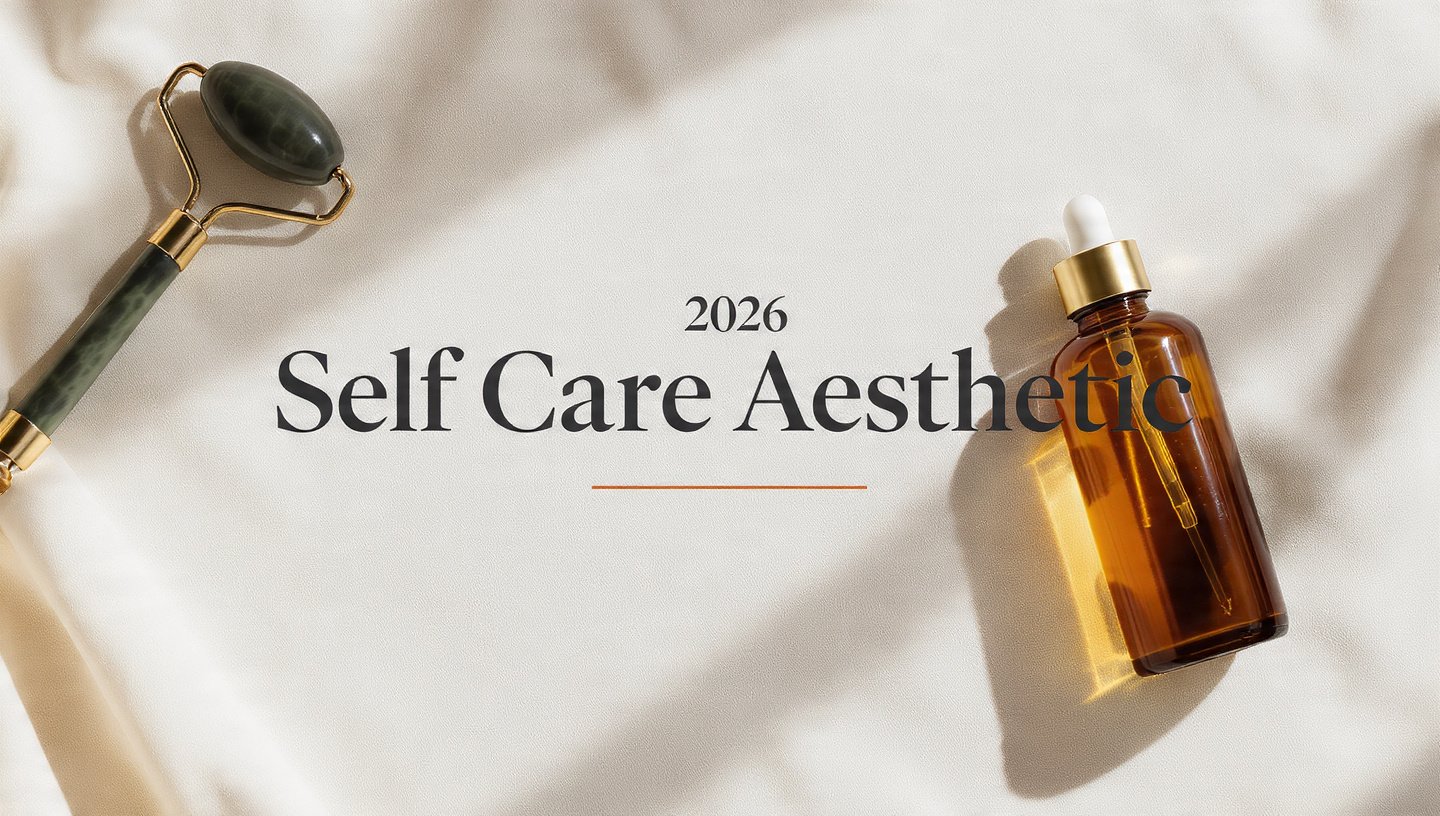
The 2026 Self Care Aesthetic Guide: Science Over Consumerism
A self care aesthetic is the intentional design of a multi-sensory environment and routine that signals safety to your nervous system, producing measurable skin and mental health benefits when practiced consistently. It is not a product list. You can build a clinically relevant aesthetic that visibly changes your skin and stress levels without purchasing a single new item.
The distinction matters because the commercialization of wellness has convinced an entire generation that a beautiful practice requires beautiful, expensive objects. The American Psychological Association’s 2023 Stress in America survey found that 76% of adults reported stress-related health impacts, with skin reactions like breakouts and inflammation being among the most common physical manifestations. The ritual, not the receipt, creates the biological shift.
This article examines the neuroscience and dermatological evidence behind the self care aesthetic, separates genuine practice from consumerism, and gives you a framework for building a sensory routine that is safe for sensitive skin, sustainable on any budget, and actually effective at reducing the cortisol that ages your skin faster than almost any environmental factor. You will walk away with a checklist, concrete ideas, and the science to evaluate every self care claim you encounter.
What Is a Self Care Aesthetic?
A self care aesthetic is a personally curated sensory and ritualistic approach to wellness practices that emphasizes visual, tactile, and olfactory coherence to deepen the body’s relaxation response. It transforms functional hygiene and stress management tasks into a deliberate, present-moment experience that signals safety to the limbic system. This signaling is what separates aesthetic self care from simply going through the motions.
The concept emerged from the collision of social media visual culture and the genuine clinical need for non-pharmacological stress reduction. The term “aesthetic” in this context draws from its philosophical root, a branch of sensory-emotional values, rather than its modern conflation with consumer beauty. A correctly designed aesthetic practice triggers a neural cascade that measurably lowers salivary cortisol and increases heart rate variability, a marker of parasympathetic nervous system activation.
What makes the aesthetic component clinically relevant, not frivolous, is the predictability it creates. The brain interprets a consistent, pleasing sensory environment as evidence that the environment is non-threatening. When you use the same ceramic bowl, the same textured cloth, the same unscented balm, your nervous system begins to respond to the ritual’s opening cues before the practice even begins. This anticipatory relaxation is the mechanism that gives the aesthetic its physiological power.
Key Takeaway: The aesthetic is a sensory signal of safety, not a style of consumption. Its power comes from the consistency of the ritual, not the cost of the items used.
The Science of the Self Care Aesthetic
The self care aesthetic operates on the brain-skin axis, a bidirectional communication pathway where psychological states directly alter skin barrier function, inflammation levels, and wound healing speed through neuropeptides and stress hormones. A study published in the Journal of Investigative Dermatology demonstrated that psychological stress impairs stratum corneum barrier recovery by increasing endogenous glucocorticoids, which reduce ceramide synthesis in the epidermis. Your skin barrier rebuilds itself more slowly when you are stressed.
Sensory pleasure, the feeling of warmth, a gentle texture, a visually ordered space, counteracts this process. The sensory cortex processes these pleasant inputs and sends inhibitory signals to the amygdala, downregulating the HPA axis and reducing the systemic release of cortisol. This is not relaxation as a luxury. It is a physiologically necessary counterbalance for anyone living with chronic, low-grade stress. The aesthetic you curate is the external scaffold that triggers this internal cascade.
The visual component is particularly underappreciated. Environmental psychology research has long shown that visual clutter elevates cortisol and increases subjective fatigue. An aesthetic routine that includes visual order, soft, diffused lighting, and natural materials engages the brain’s visual processing centers in a calming manner, freeing working memory and reducing the cognitive load that contributes to the allostatic load that accelerates skin aging.
Self Care Aesthetic vs. Real Self Care
Real self care is any intentional behavior that maintains or improves your physiological and psychological health, even when it provides no immediate pleasure. The self care aesthetic is a subset of real self care that leverages sensory design to make those health-maintaining behaviors more consistently rewarding and therefore more sustainable. Confusing the two leads directly to consumerist burnout.
A face mask purchased because the packaging matched your bathroom is not self care unless the act of using it reduces your stress. If the purchase added financial anxiety, the net physiological effect was negative. Real self care also includes difficult, unaesthetic acts: scheduling a colonoscopy, having an honest conversation about relationship resentment, or enforcing a boundary with a parent. These acts lack the pastel visual appeal but produce far greater long-term health outcomes than any product ritual.
The aesthetic becomes a trap when it becomes another standard to perform rather than a tool to recover with. A 2022 study in the Journal of Consumer Research identified a phenomenon called “aesthetic stress,” where the perceived pressure to curate a visually perfect environment for self care increased anxiety and cortisol levels in participants. The aesthetic must serve the function. When you find yourself styling the tools more than using them, the aesthetic has become the problem it was meant to solve.
| Self Care Aesthetic | Real Self Care | |
|---|---|---|
| Primary Mechanism | Sensory-triggered parasympathetic activation | Behavioral health maintenance and stressor removal |
| Appearance | Visually coherent, often stylized | Function-first, often unglamorous |
| Risk | Can become performative consumerism | Can feel like another chore if not supported by recovery rituals |
| Best Application | Daily recovery and stress reduction | Long-term health trajectory and boundary setting |
Key Takeaway: The aesthetic is a delivery system for real self care. It is the spoon that carries the medicine, not the medicine itself.
Evidence-Based Self Care Practices
Evidence-based self care refers to practices with a documented physiological or psychological benefit established through randomized controlled trials, longitudinal cohort studies, or a strong consensus of clinical experts, not popularity. When building your aesthetic, select practices from this evidence foundation first, then wrap them in sensory design.
Physical Evidence-Based Practices:
- A warm bath lasting 20 minutes, 90 minutes before bed, has been shown in a 2019 Sleep Medicine Reviews meta-analysis to increase deep sleep onset and duration through passive body heating and the subsequent cooling rate.
- A consistent sleep-wake schedule anchors your circadian rhythm, which directly regulates skin cell regeneration and transepidermal water loss, which peaks at night.
Emotional Evidence-Based Practices:
- Structured journaling using the Pennebaker expressive writing paradigm, writing continuously about emotional experiences for 15 minutes, has been shown to reduce inflammatory markers.
- Mindfulness meditation, specifically a body scan practice, decreases activity in the default mode network, the brain system linked to rumination, and lowers cortisol measurably within 8 weeks of consistent practice.
Social Evidence-Based Practices:
- Scheduled, distraction-free time with a non-judgmental confidant increases oxytocin, which directly buffers the HPA axis response to stress. This is a biological effect, not just a nice feeling.
- Acts of concrete, tangible support for another person, distinct from generic “socializing,” create a sense of agency that counters the helplessness characteristic of chronic stress.
Each of these practices can be aestheticized through lighting, setting, and sensory tools, but the evidence for their effectiveness comes from the action itself, not the accessory.
Psychodermatology and Self Care
Psychodermatology is the medical discipline that studies and treats the interaction between the mind and the skin, recognizing that psychological states directly cause, trigger, or worsen skin conditions through measurable neuro-immuno-cutaneous pathways. Your aesthetic self care routine is a low-cost, high-access psychodermatological intervention.
The primary mechanism involves corticotropin-releasing hormone (CRH), which is released in the brain during stress and also produced locally in the skin. CRH stimulates mast cells to release histamine, triggers sebaceous glands to produce more oil, and impairs the skin’s antimicrobial peptide defenses. This single stress-induced molecule can trigger an atopic dermatitis flare, worsen acne, or prolong a psoriasis lesion without any change in your topical skincare products.
A well-designed aesthetic ritual short-circuits this cascade. The multi-sensory ritual activates the parasympathetic nervous system and inhibits CRH release both centrally and peripherally. Research from the Department of Dermatology at the University of Rochester has shown that patients with psoriasis who engaged in a daily sensory relaxation practice, including guided imagery and tactile focus, saw a clinically significant acceleration of lesion clearance when combined with standard topical treatment compared to treatment alone.
For your aesthetic to function as psychodermatological care, the ritual must include a tactile component that focuses your attention directly on the physical sensation of your skin without judgment. This guided interoception, the sense of the internal state of the body, has been shown to reduce the catastrophization that worsens the itch-pain cycle in chronic skin conditions.
Key Takeaway: Your aesthetic self care is not a mental health add-on to skincare. It is a direct neuro-immunological intervention that changes the chemical environment of your skin from the inside out.
The Stress-Skin Axis and Your Care Routine
The stress-skin axis describes how psychological stress is translated into skin disease through the release of neuropeptides, neurohormones, and pro-inflammatory cytokines that alter barrier function, immune response, and sebaceous gland activity. Your care routine is the practical place where you can interrupt this translation process daily.
When the HPA axis is chronically activated, the sustained elevation of cortisol directly reduces the production of filaggrin, a protein essential for maintaining the stratum corneum barrier. Less filaggrin means a weaker barrier, higher TEWL, and greater penetration of irritants and allergens. The aesthetic routine, performed consistently at the same time each day, provides a temporal anchor that your HPA axis learns to anticipate, beginning the downregulation process as soon as the first sensory cue appears.
The timing of your aesthetic care routine matters. Cortisol naturally peaks approximately 30 to 45 minutes after waking, a phenomenon called the Cortisol Awakening Response (CAR). Applying your aesthetic routine’s most soothing elements during this window, gentle facial massage with a cool tool, a slow application of a hyaluronic acid serum, standing on a soft mat while you breathe deeply, can directly dampen the CAR and set a lower stress baseline for the entire day.
A second strategic window is the transition from work to evening. Without an aesthetic sensory ritual, many people remain in a state of low-grade sympathetic activation, with elevated heart rate and muscle tension, well into the night. A sensory transition, dimmed light, a specific calming scent, a textured fabric on your chair, a warm water rinse of the face, signals the brain that the vigilance period has ended and it is safe to shift into repair mode.
Sensory Self Care Practices
Sensory self care engages each of the five senses deliberately to anchor attention in the present moment and signal safety to the amygdala. A complete aesthetic routine touches every sense, but you must curate each one intentionally rather than defaulting to what is heavily marketed.
Tactile practices are the most clinically underused lever. The skin is the body’s largest sensory organ. Applying your moisturizer with slow, firm, effleurage-like strokes activates pressure receptors that directly stimulate vagal nerve activity. Using a weighted blanket during your evening rest period provides deep pressure stimulation that reduces subjective anxiety scores and lowers evening cortisol, according to a 2020 study in the Journal of Clinical Sleep Medicine. The texture of your clothing, your skincare tools, and the surfaces you touch during your routine are all sensory inputs. Choose them for sensation, not just appearance.
Olfactory practices are the most powerful but the most safety-sensitive. The olfactory bulb projects directly to the amygdala and hippocampus, bypassing the thalamic relay that other senses pass through. This is why scent can instantly alter mood. However, fragrance is the number one cause of allergic contact dermatitis globally. If you choose to use scent, use it in the environment, a single drop of a known essential oil on a diffuser stone, not on your skin. For skin-safe aromatherapy, the risk of sensitization always outweighs any aesthetic benefit.
| Sensory Modality | Evidence-Backed Practice | Skin-Safe Alternative |
|---|---|---|
| Tactile | Slow, firm face and body massage during moisturizing | Always use clean hands or a chilled metal roller |
| Olfactory | Ambient room scent via a diffuser stone | Never apply fragrance, including essential oils, to the skin |
| Visual | Soft, warm, indirect lighting (candlelight or dimmable 2700K LED) | Avoid harsh overhead blue-white light (5000K+) |
| Auditory | Non-lyrical, rhythmic sound or silence | Use a timer to avoid phone interaction during the ritual |
| Gustatory | A single, slowly consumed herbal tea or cool water | Avoid alcohol, which is a vasodilator that can worsen facial redness |
Key Takeaway: The most powerful aesthetic practice is fragrance-free. Decouple scent from skin and let your olfactory pleasure come from your environment, where it cannot trigger contact dermatitis.
How to Build a Self Care Aesthetic Routine
Building a self care aesthetic routine that withstands the collapse of motivation requires you to anchor every practice to an existing, immutable part of your daily schedule and strip the routine down to a minimum viable practice that takes less than five minutes. Novelty and complexity are the enemies of adherence.
To build your routine:
- Select one existing daily anchor: This must be something you already do every day without fail, such as making coffee, brushing your teeth, or taking your first sip of water. The aesthetic routine will become a sensory addition attached to this anchor.
- Define a minimum viable sensory intervention that takes 90 seconds: Choose one tactile element (cool water on your face, a textured ceramic cup, a specific face oil you warm in your hands and press into your skin) and one consistent, safe olfactory element from your environment (the smell of the coffee itself, a single fragrance-free candle burning in the next room).
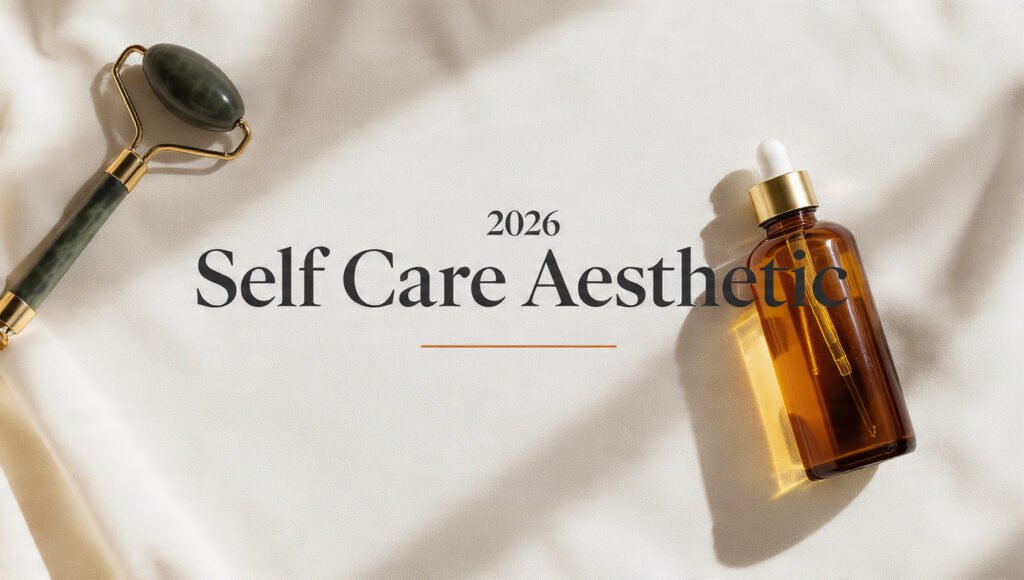
- Design the visual field for the 90-second window: Clear the one square foot of counter space you will see. Place a single, beautiful, functional object there: a stone gua sha tool, a well-designed amber glass bottle, a linen hand towel. This is your visual signal of safety.
- Attach a single parasympathetic breath cycle to the start of the practice: Inhale for four seconds, hold for four, exhale for six. Repeat three times. This voluntary respiratory pattern directly stimulates the vagus nerve and tells the brain stem that you are safe, chemically initiating the relaxation response before the aesthetic practice even begins.
- Set a firm, external stop time and transition: Use a physical timer, not your phone. When the timer ends, take one final touch, one final scent, and say a single closing word to yourself (“done,” “settled,” “clear”). This prevents the practice from bleeding into procrastination and turns it into a completed, psychologically satisfying act.
The aesthetic appeal of this routine comes from the high-quality sensory materials and the absolute, uncluttered simplicity, not from product accumulation. A single beautiful object used with full attention is more neurologically potent than a shelf of unused alternatives.
How to Romanticize Your Skincare Routine
Romanticizing your skincare routine means converting it from a product-application sequence into a consistent, multi-sensory ritual that engages your attention and signals safety to your nervous system, which directly enhances skin barrier recovery. The focus must shift from correcting perceived flaws to experiencing the sensation of care.
The first structural change is to remove your phone from the room entirely. The phone is an attention thief and a cortisol trigger. Replace it with a dedicated, beautiful timer that has no other function. This single swap reclaims the mental space needed for the ritual to work. Your skincare products become the sensory tools of a practice, not items you scroll past while waiting for serum to dry.
Apply each product with a deliberate, slow technique. Warm a pea-sized amount of moisturizer between your palms, bring your cupped hands to your face, and inhale once, regardless of whether the product is scented. The deep inhale paired with a tactile cue conditions a relaxation response over time. Then press and release the product into your skin, moving from the center of your face outward. This press-and-release motion stimulates skin mechanoreceptors and avoids the dragging that contributes to irritation.
Choose one object in your routine to be your aesthetic centerpiece: a single amber glass dropper bottle, a rose quartz roller, a ceramic cleansing bowl. Everything else should be visually simple and functional. The contrast between the centerpiece object and the clean, empty space around it creates the aesthetic. The beauty comes from the absence of visual noise, allowing your attention to rest on the sensation of temperature, texture, and pressure.
Self Care Aesthetic for Sensitive Skin
A self care aesthetic for sensitive skin is built entirely on tactile and visual sensory elements, with all olfactory and botanical product complexity removed, because fragrance, essential oils, and complex plant extracts are the primary triggers for cutaneous inflammation in reactive skin conditions. Your aesthetic palette is texture, temperature, and negative space.
The American Academy of Dermatology specifically recommends that individuals with sensitive skin, atopic dermatitis, or rosacea use only fragrance-free products. This directive extends beyond the word “fragrance” on a label to include any botanical extract that contains volatile aromatic compounds like limonene or linalool. Your aesthetic practice must reject the cultural conflation of “natural scent” with safety. Lavender oil is not safer than synthetic fragrance. Both contain the same sensitizing terpenes.
Your sensory tools are temperature and application method. A refrigerated jade roller or a simple, smooth stainless steel spoon run under cold water provides a vasoconstricting, depuffing effect that feels sharp, clarifying, and beautiful without any chemical interaction. The visual of your cool tool resting on a clean linen cloth is your aesthetic moment. Your moisturizer, applied in the press-and-release method described earlier, becomes a tactile meditation.
Your “shelfie” is a photograph of empty space. The aesthetic for sensitive skin is radical minimalism because every additional product is a potential immunological event. Your product lineup is a cleanser, a moisturizer containing ceramide NP, cholesterol, and fatty acids at a 3:1:1 ratio, and a mineral sunscreen using only zinc oxide or titanium dioxide. This is not deprivation. It is the most luxurious form of self care, giving your skin exactly what it needs to function and nothing that harms it.
Key Takeaway: For sensitive skin, the aesthetic is defined by what you leave out. Empty space is a visual sensory pleasure that signals safety to a reactive immune system.
Cortisol-Reducing Self Care
Cortisol-reducing self care uses specific, timed practices that directly inhibit HPA axis activity and lower circulating glucocorticoids, which are the hormones that accelerate collagen breakdown, increase sebum production, and impair the skin barrier. Your aesthetic routine is a cortisol management protocol as much as a skincare practice.
The single most effective cortisol-reducing practice you can integrate into your aesthetic is a morning sensory ritual that dampens the Cortisol Awakening Response (CAR). The CAR is a sharp, natural cortisol spike that happens within the first 45 minutes of waking. An exaggerated CAR correlates with higher perceived stress and can trigger midday skin oil surges. Engaging in a 90-second tactile-water and deep-breathing sequence before you look at a screen directly reduces the CAR peak.
Laughter is a potent, evidence-backed cortisol reducer that is rarely aestheticized. A 2021 study in the journal Emotion found that even the anticipation of laughter decreased cortisol by 39% in participants. Curating a specific, short, reliably humorous audio message, a 60-second clip from a comedian, a voice note from a specific friend, integrated into the end of your aesthetic evening routine, creates a chemically anti-inflammatory endpoint to the practice.
A final, overlooked element is ambient temperature. Cool room temperature during sleep, between 60 and 67 degrees Fahrenheit, optimizes melatonin release, and the quality of your sleep directly determines your next-day baseline cortisol. Your aesthetic evening practice should include the act of cooling your environment, opening a window, turning down a thermostat, switching to a lighter, textured sleep fabric, and framing this act not as a chore but as the final, luxurious, temperature-based sensory step of your practice.
The Minimalist Self Care Aesthetic
The minimalist self care aesthetic is an evidence-based curation method in which you reduce your practice to the fewest possible sensory tools and products that still produce the full neurobiological relaxation response, rejecting the consumerist assumption that more options create better outcomes. Decision fatigue elevates cortisol, and a cluttered visual environment does the same.
A minimalist aesthetic means one object per sensory category. One tactile tool. One visual focal point. One auditory environment. One ambient scent removed from skin contact. When you have one of each, you never make a decision during your routine. Your brain associates that single object with the relaxation response itself, strengthening the conditioning effect. A shelf of 12 masks means 12 decisions and a weakened neural connection to any single one.
The financial argument is also a clinical one. A minimalist practice is accessible. A $12 bottle of plain, fragrance-free jojoba oil in a single beautiful bottle you will keep for years is a more potent aesthetic tool than a $90 luxury serum that advertises 17 rare botanicals but introduces 17 unknown variables to your immune system. The aesthetic is in the intimacy and the consistency, not the rarity of the ingredients.
To build a minimalist aesthetic, audit your current products and tools. Ask a single question for each: “Does using this change my breathing?” If the object itself does not prompt a change in your physiological state when you pick it up, it is a functional object, not an aesthetic tool. You need very few of these. The rest can be given away or placed out of sight. The resulting empty counter is your aesthetic canvas.
| Maximalist Aesthetic | Minimalist Aesthetic | |
|---|---|---|
| Visual | Shelves of curated products | Single focal object, clean counter |
| Olfactory | Multiple candles and diffusers | One diffuser stone, unscented room |
| Tactile | Multiple tools, brushes, rollers | One cool tool or your own hands |
| Financial Cost | High and recurring | Low, one-time, intentional |
| Skin Risk | High (multiple allergen sources) | Low (controlled, known inputs) |
Key Takeaway: Minimalism is a sensory intervention. Empty space is not a sign you are missing something. It is the visual signal that allows your nervous system to settle.
Curating an Aesthetic Self Care Day
An aesthetic self care day is a pre-scheduled, full-day practice with a structured sequence of sensory events designed to achieve a sustained state of parasympathetic dominance and complete the stress cycle that was left open from the previous week. It is not a catch-up day for neglected errands.
The structure of the day must be planned the night before. Aesthetic self care fails when it becomes a negotiation with your mood. The plan is a prescription. Wake at the same time you always do, because circadian consistency is part of the care. The first hour contains your standard morning aesthetic ritual, performed with full attention and no time pressure. No phone. No information input of any kind.
The middle of the day is for a single, extended tactile practice. This could be a long, warm bath with unscented bath oil, followed by a slow full-body moisturizing session using firm, lymphatic-drainage-style strokes upward from your feet. This practice should take an hour. It completes the neurobiological stress cycle that your body has been holding all week through the large-muscle relaxation feedback that only sustained physical rest can provide.
The evening is for a social sensory practice. A shared meal with a specific person, eaten without media, where you describe one sensory detail of the food to each other, returns your social engagement system to a state of felt safety. The day ends with your standard evening aesthetic ritual and a firm, early bedtime. You have not just “relaxed.” You have completed a structured, physiologically necessary recovery protocol.
Creating a Self Care Aesthetic at Home
Creating a self care aesthetic at home requires you to designate a physical space, no larger than four square feet, that is visually distinct from the rest of your living environment and used exclusively for your practice. This spatial boundary is the most important design decision you will make.
The space does not need to be a separate room. It can be the corner of a bathroom counter, a specific chair by a window, or a mat on the floor in your bedroom. The requirement is that the visual field from that spot contains nothing that reminds you of incomplete work. Face away from the pile of laundry. Place a small, beautiful folding screen if needed. The visual input to your brain from this spot must be simple, ordered, and calm.
Lighting is your primary design tool. Overhead lighting is incompatible with the parasympathetic response. A single, small, warm-toned lamp or a beeswax candle (unscented, for sensitive skin safety) placed at counter height creates a pool of soft, diffused light. This visual cue of evening or sanctuary, regardless of the actual time of day, tells the ancient part of your brain that the vigilance period is over. The lighting is the signal.
Sound control is non-negotiable. True silence is often more activating than calming because it leaves hypervigilant ears scanning for threat. A consistent, low, non-lyrical sound, a simple white noise machine, a small indoor water fountain, or a “brown noise” track played from a dedicated audio device that cannot receive notifications, fills the auditory channel without demanding attention. Your phone must be in another room, on a charger, and silenced. Any notification sound will completely reset your neurobiological progress.
The Self Care Aesthetic Checklist
A self care aesthetic checklist is a single-page, pre-ritual verification tool that ensures every sensory element of your practice is in place so you can move through your routine without decision-making or distraction. The checklist is a pre-commitment device that prevents the practice from unraveling.
Environment Check (1 minute):
- Phone is in another room, silenced, and charging.
- Timer is set for your designated duration (15, 30, or 60 minutes).
- Warm, indirect light source is on; overhead lights are off.
- Consistent ambient sound is playing if silence is not soothing.
Tactile Tools Check (30 seconds):
- One clean, dedicated aesthetic tool is in its place (roller, textured cloth, ceramic cup).
- One fragrance-free skin product is open and accessible.
Visual Check (15 seconds):
- The one square foot of counter space in front of you is empty except for your chosen tool and product.
- Something textural or natural is in your peripheral vision (a linen towel, a single stone, a plant leaf).
Olfactory Check (10 seconds):
- No fragrance is applied to your skin.
- If using ambient scent, the single diffuser stone is in place across the room.
Internal Check (5 seconds, after seated or standing in place):
- Three slow, conscious breaths: inhale 4, hold 4, exhale 6. Begin.
The checklist is your ritual’s opening ceremony. The act of checking each box, mentally or physically, shifts your attention from the diffuse noise of daily life into the focused present moment. By the time you reach the Internal Check, the relaxation response has already begun.
Self Care Aesthetic Ideas
Self care aesthetic ideas are specific, modular sensory practices you can rotate into your routine, each selected for its evidence-based stress-reduction mechanism and its safety for skin barrier function. None require a purchase, but each can be enhanced by a single, intentionally chosen, long-lasting aesthetic object.
The Cool Press: After cleansing, run a smooth stainless steel spoon under cold water for 30 seconds. Dry it. Apply your fragrance-free moisturizer. Immediately press the back of the cold spoon against the center of your forehead, then each cheekbone, then the jawline. The vasoconstriction reduces morning puffiness. The sharp, novel sensation breaks rumination and brings attention fully into the skin. The spoon, kept in a designated spot, is your only aesthetic object.
The Single Sip: Brew a cup of herbal tea, specifically rooibos or chamomile, which have clinical data suggesting mild anxiolytic effects. Pour it into a single, heavy, beautiful ceramic cup that you use only for this purpose. Hold the cup in both hands. Close your eyes. Feel the warmth. Smell the steam. Take one sip. Place the cup down. This practice stretches a 3-minute task into a 15-minute sensory experience because the object is beautiful enough to hold your attention without a phone.
The Fabric Fold: Purchase two high-quality linen hand towels. Linen has a texture that is both immediately grounding to touch and visually textural in a way that photographs beautifully without any staging. The act of folding the towel after use, making a clean, sharp edge, and placing it back in your aesthetic zone is a mini-meditation on order. The towel is your visual centerpiece, not a row of expensive products.
The Visual Reset: Once a month, remove every object from your aesthetic zone. Clean the empty surface. Stand there and breathe for 60 seconds, looking at the empty space. Then place your single chosen tool back in the exact center. This is the ritual of erasure, the aesthetic of negative space. It prevents the slow creep of object accumulation and keeps your nervous system’s response to the space sharp and undulled by familiarity.
Key Takeaway: The best aesthetic idea is the one you repeat so consistently that the object itself becomes a conditioned signal for relaxation. Choose one object. Use it every day.
Frequently Asked Questions About Self Care Aesthetic
What exactly is a self care aesthetic?
A self care aesthetic is the intentional design of your sensory environment and routine to trigger a neurobiological relaxation response during health-maintaining practices.
It uses visual order, specific textures, ambient sound, and safe olfactory cues to signal safety to the brain.
This is not a style or a product category; it is a functional framework for making self care consistent and physiologically potent.
Is the self care aesthetic just about buying things?
No, the self care aesthetic at its core is about sensory signaling, not product accumulation.
Consumer culture has exploited the aesthetic by equating it with a shelf of matching products, but the mechanism of action is the sensory ritual, not the purchased object.
A single beautiful object used with daily attention is more clinically effective than an expensive, unused collection.
How can I make my skincare routine more of a self care ritual?
Remove your phone from the room, designate a specific timer, and apply your fragrance-free products with slow, intentional, press-and-release hand motions.
Add a single, beautiful, tactile object, such as a ceramic bowl for cleansing water or a cool metal roller, to anchor your attention in the sensation of the moment.
Shift your mental focus from correcting skin flaws to experiencing the texture, temperature, and pressure of care.
What are the best self care aesthetic ideas for sensitive skin?
The best aesthetic ideas for sensitive skin are entirely fragrance-free and built around temperature and texture.
Use a refrigerated smooth stone or metal tool for depuffing and sensory grounding, and focus on the visual aesthetic of radical minimalism, an empty, clean counter with one beautiful, functional object.
Your aesthetic is defined by the safety and negative space you create, not the products you apply.
Can a self care aesthetic actually reduce anxiety?
Yes, a consistently practiced, multi-sensory aesthetic routine directly activates the parasympathetic nervous system and lowers cortisol, which is the primary hormonal driver of the physiological anxiety response.
The predictable visual, tactile, and environmental cues signal safety to the amygdala, reducing the HPA axis activity that sustains anxious states.
This is a clinically informed, non-pharmacological anxiety management tool, not a replacement for therapy when needed.
How do I start a self care aesthetic on a budget?
Start by removing objects from a small, designated area rather than buying new ones, and select one existing beautiful object, a mug, a stone, a linen cloth, to be your focal point.
Pair this object with a single 90-second sensory practice attached to a daily habit you already have, such as your morning water or evening tooth brushing.
The aesthetic is created by the empty space around the object and the consistency of your attention, both of which are free.
You now have a complete, scientifically grounded framework for a self care aesthetic that does not depend on consumerism, will not trigger sensitive skin, and produces a measurable biological effect. The most important thing to do next is to select your single existing beautiful object and attach a 90-second practice to an anchor in your day. Do that tonight. Do it tomorrow morning. The object and the practice will begin conditioning a relaxation response that grows stronger over the coming weeks.
The visual beauty of your practice is real and it matters. It matters because it signals safety to the oldest, most vigilant part of your brain. But you never need to purchase an aesthetic from anyone else. You create it by clearing space, choosing one thing you love to touch and look at, and returning to it every single day.
A product on a shelf is just a product. A product in your hands, used with full attention, as part of a sequence you never rush, is a tool for changing the neurochemical environment of your skin from one of stress and breakdown to one of safety and repair. That is the real self care aesthetic. You already own it.